Showing posts with label Protest. Show all posts

Friday, May 5, 2017

Christianity is Failing in the United States of America

Recently, I had the good fortune to attend Ecumenical Advocacy Days in Washington, D.C.  I didn't really know what to expect going into the conference, but I can honestly say it was one of the most rewarding experiences of my professional life.  Throughout those four days, I was challenged and encouraged, humbled and praised.  We heard from power-house speakers whose passion and dedication to social justice fueled my own.  I was made at some times to feel helpless, and at other times to feel powerful.  One instant filled with sadness, the next overwhelming joy.  I was enraged.  I was hopeful.  The world was laid out for me in all of its stark brokenness.  The curtain yanked back to reveal the wickedness within.  Then an image of the world as it could be, as it should be, was offered.  It was breathtakingly beautiful.  I was moved to tears nearly as often as to laughter.  I was invigorated.  I was motivated.  I was inspired.

I could go on and on about this conference, and spend hours and hours writing about everything I took away from it.  But there's one major takeaway that I really want to focus on in this moment, which is this...

Christianity is failing in the United States of America.

Let me explain.

When I say Christianity is failing in the United States, I don't just mean the Church is failing.  I don't mean it's failing because of the current trend of young people leaving the Church, essentially taking its future with them, although that's definitely a consequence of the failing.  I also don't mean that the U.S. has strayed so far from its Christian roots, both imagined and historically grounded, that it has lost its central values and is navigating the modern world with a broken moral compass.  No, none of that is what I mean when I say that Christianity is failing in the United States.

Christianity is failing in the United States because Christians don't love enough.  We say we do.  We love to talk about just how much we love one another, about how welcoming and hospitable we are towards each other.  When it comes down to it, however, when the call comes to stand up and demand justice, to protect the vulnerable, to challenge the status quo even at the risk of ourselves and our privileges, do we answer that call?

Some of us do.  Most of us don't.

We make excuses that the world is to broken, there's just to much, there's no way for any of it to be truly fixed anyway.  We obsess so much over a Kingdom of God that we envision far off in the future, an afterlife of perfection that is just waiting for us on the other side, that we don't try to bring the Kingdom to us in the here and now.  We put all of the responsibility of change and justice in God's hands, but don't bother to carry our fair-share of the burden.  We push our own agendas on others, disguising it as justice, instead of considering what is good for all people, not just ourselves.

Christianity is failing in this country because we satisfy ourselves with band-aid solutions to our societal problems, instead of digging in and looking at the true issues at the foundation of those problems.  During Ecumenical Advocacy Days, we focused a lot of our attention on Martin Luther King Jr. and his speech "Beyond Vietnam".  In this particular speech, he highlights the "triplets of evil": racism, materialism, and militarism.  Much of what was discussed during the four days focused on the impact and implications of these triplets, still as relevant today as they were 50 years ago when Dr. King wrote his speech, especially within the realm of politics.

People always say that politics don't belong in Church.  The separation of Church and State, for many, means that the Church has no right to try and sway people politically.  To some extent, this is true.  The Church is no place for Bipartisan politics.  The Church is no place for political agendas that don't benefit the majority of people.  But politics do belong within the Church.  And the Mosque.  And the Synagogue.  And the Temple.  Christians must be politically aware and active.  People of faith must be politically aware and active.  It is through our politics, through our government, that the nation's morality and priorities are displayed.  Right now, looking at our politics, the proposed policies and direction the government wants to head, the United States appears greedy.  Power-hungry.  Selfish.  Unconcerned with the most vulnerable and oppressed among its own people.  Unconcerned with the devastation we often leave in our wake around the world.

But what are we, specifically we Christians, doing about it?

Our preachers offer up shallow sermons and homilies.  They don't challenge us in our current context.  They don't address the concerns and realities we face day-to-day.  Yet, whenever a pastor or priest does try to speak to the injustices surrounding us, we criticize them.  Tell them it's not their place.

How often when we talk about Dr. Martin Luther King Jr. do we refer to him as Reverend Dr. Martin Luther King Jr.?  Why are we so easily able to make his faith a footnote of his life when it was the driving force behind almost everything he did?  Why are we so afraid to be challenged by our preachers?  To be challenged by our faith?  To challenge our faith and our faith leaders in turn?

Do we really think we're living out our faith when we turn away from injustice and corruption?  That we're spreading the Gospel message when we refuse to give up any of our creature-comforts so someone less fortunate can have at least what they need to not only survive, but thrive along with us?  That we're truly upholding the gift of Christ's sacrifice on the cross by blaming the poor and oppressed for their lot in life, instead of holding accountable the powers and systems that keep the poor poor and the rich rich?

If we, the people of the Christian faith, do not prioritize the needs and support of the poor and most vulnerable in this nation and this world...if we support or turn a blind-eye to policies that hold materialism and militarism over care of the hungry, the war-torn, the displaced, and the oppressed...then we fail to uphold our purported Christian values.  When white Christians refuse to recognize their innate privilege, refuse to understand how that privilege is built on the pain and suffering of people of color, and refuse to stand against it despite the cost, we fail.  When feminist Christians fail to recognize the extra barriers facing women of color, and don't first strive to catch them up before moving forward in the pursuit of gender equity together, we fail.  When older Christians scoff at young people's efforts for justice, lament at the lost of the young within the Church but don't actually take the time to understand that young people have lost faith in a Church they view as stagnant and passive, we fail.  If we, as Christians, keep our heads down and ourselves quiet because "I doesn't affect me", we fail.  If we don't reach out a hand of friendship and love to our Muslim brothers and sisters, standing up to those who would spread Islamophobia so that hate towards a community of faith is allowed to grow, we fail.  If we aren't enraged every time an unarmed black man is killed in the streets by police, we fail.  If we aren't deeply concerned about the injustice of our prison systems, and how people of color are disproportionately incarcerated to an alarming degree in this country, we fail.  If we don't fight to protect our environment, believing it a gift from God that is not ours to use and abuse, we fail.  If we don't raise our voices in protest when the health of our most vulnerable is put at risk because those in power have prioritized the profits of insurance companies over the well-being of the public they are meant to serve, we fail.  If we don't always work to show compassion and understanding to those whose backgrounds, experiences, and beliefs are different from our own instead of judging and condemning them, we fail.

We fail in living out the Gospel message of radical love, acceptance, and compassion.  We fail to appreciate the gift of the sacrifice that was the crucifixion.  To recognize our responsibility to each other and our world in light of the promise of the resurrection.  We fail Christ.  We fail God.

And in this failure, we forfeit the privilege to call ourselves Christians.

Yet, we are human.  We all will fail from time to time.  Our greatest failure, however, is when we refuse to recognize our own faults.  Our own shortcomings.  When we refuse to try and be better because our own stubbornness and certainty of our own righteousness blinds us to the pain and struggle of others.

Christians need to do better in this country.  We need to love more.  Listen more.  Fight more.  We need to let ourselves be challenged, and not shy away from conflict but embrace it as an opportunity to grow and learn more about our world.  Our faith is not a comfortable one.  We should not let our own comforts mean more to us than the justice of others.

We need to do better, but we can do better.  If we remember that our faith is not, at its heart, a faith of power and prestige, but a humble faith, a sometimes rebellious faith, yet a faith always centered on love and compassion, we stand a chance of getting it right.

That's what I witnessed at Ecumenical Advocacy Days.  Christians from all denominations coming together to do good and to fight injustice because their powerful faith would not allow them to sit on the sidelines and simply watch things happen.  It drove them to make their voices heard, and hold the powers that be accountable for their actions.  It gave me real hope that things can get better.  That things will get better.  We just need to stop using our faith as an excuse to do nothing, and recognize it as our reason to do everything we can to make this world a better place.

Until next time,
Erin B.

Below are some of the very notable plenary speakers from Ecumenical Advocacy Days.  Feel free to view and enjoy!


Tuesday, February 21, 2017

The Privilege of Indifference

In the 2005 film V for Vendetta, in the not-to-distant future, England has become a police state run by a fascist government.  The people, for the most part, live pretty regular lives so long as they stay in line, but there's a undercurrent of fear that permeates the film and adds a layer of tension that keeps the viewer on the edge of their seat even during the most benign scenes.  You see hints of this fear here and there.  Pasted on the walls of a normal London street are signs reminding citizens that their strength is in their unity, and their unity comes from a common faith.  Hanging on the wall of a retirement home is a picture of the country's High Chancellor, prominently on display, like so many dictators before him, to remind the people who controls them.  The fear is subtle, and it's only the viewer who seems to recognize it, as so many of the characters seem numb to it.  But it's a very real fear.  A fear of what will happen should anyone step out of line.  Of secret police patrolling the streets at night, enforcing the government's curfew in brutal ways.  Of a message of unity, but a unity built on sameness of faith, sexual orientation, ethnicity, and nationality.  There is no room for error in this world.  No room for difference.  There is only obey, or face the consequences.

Enter V, a masked vigilante whose sole mission in life is to bring the government to its knees by inspiring a revolution among the people.  He has no identity apart from the Guy Fawkes mask and black clothing he always wears.  In one of the movie's earlier scenes, V commandeers the government-sponsored emergency channel to broadcast a message to all of London at once.


In his speech, he says what everyone knows but are too afraid to admit: "...there is something terribly wrong with this country, isn't there?"

He talks about how the people have lost their freedom to express themselves and object.  How intolerance, injustice, and oppression have come to be the norms of their society.  He poses the questions "How did this happen?  Who's to blame?", and while there are officials and politicians and those in power who had worked to create the systems that rule England's dystopian future, it isn't all on them.

"If you're looking for the guilty, you need only look into a mirror."

For all the terrible things that the government has done in V's world, it's ultimately the people who stood by and let it happen.

"I know why you did it.  I know you were afraid.  Who wouldn't be? War, terror, disease.  There are a myriad of problems which conspired to corrupt your reason and rob you of your common sense.  Fear got the best of you..."

Fear.  Fear is what drove the people to put those who would come to cause so much harm into power.  Fear got them there.  And then indifference kept them there.

In the movie, V is battling against the people's indifference to what is happening around them as much as he is battling the fascist government ruling them.  His call to revolution isn't merely a strike at the government, but an attempt to rouse the passions of the people.  To wake them up to the truly terrible things that are happening around them so that they will rise up and fight to regain their freedoms.

The thing that always scared me the most about V for Vendetta was how realistic that future was.  How very possible that outcome seemed.

Now, it seems like the very path we're heading down.

So much has happened since Trump became President.  Already he's attacked the media, put our national parks at risk, angered our allies, given our enemies justification in their hatred of us, cut off necessary healthcare to women worldwide, put thousands of innocent people seeking refuge from their war torn homes at risk, torn families apart, given power to the dangerously inexperienced, and proven again and again he's a liar who cannot be trusted.  It's been so much in such a short amount of time, that it's truly exhausting.

I've written letters, made phone calls, gone to rallies, spoken with representatives, attended forums, and posted every speck of truth I can get my hands on.  Yet nothing ever seems to come from any of it.  Most of our politicians who oppose Trump up until now have appeared overly cautious, and the rest don't seem to care about what the people actually have to say.  As Trump issued more and more orders, and our Congress stood by and watched, it all seemed hopeless.  So pointless.

In my lowest moment, I'm ashamed to admit, I thought to myself, "What does it matter if I resist or not?"  I was stressed and not sleeping well.  My mind was overly consumed with what was going on in the world around me.  I was afraid I was becoming annoying and preachy because I wasn't letting up in my outspokenness against the President.  "Why go through all the trouble?  Why put myself through this stress?  I could just stop.  I could just ignore it all.  It's not like any of this really affects me..."

And then I realized what was happening.  I was giving into one of my greatest privileges.

Indifference.

It's true, a lot of what's happening won't directly affect me.  I'm a white Christian with a good job, insurance, and tons of people to support me in case something goes wrong.  I'm not an immigrant, I'm not a refugee.  I support Planned Parenthood, but I don't personally need it.  I'm straight and will have no problem someday getting married.  I haven't had to fight every day of my life for basic respect and recognition as a person.  When I get pulled over, my only worry is how much the ticket will be.  I've never been wealthy, but I've never had to worry about being able to eat a meal or having weather-appropriate clothes when I need them.  I can afford to buy tampons and pads, and have never had to choose between them and food.  As a kid, I never had to worry about whether my parents would be home when I was out of school, or if they'd been taken during an ICE raid.  I don't have to worry about being treated differently if I move to certain neighborhoods, or of being seen as "other" simply because of how I look, dress, or pray.  The fear of a bomb dropping on my home at any moment is not my constant reality.

I am very privileged, and most of my privilege comes from pure luck.  I was lucky to be born into the life I lead.  I was lucky that opportunities were more easily provided to me than to others.  I've worked hard to get where I am, but I know that under that hard work is a foundation of privilege that has propelled me further in life than those who started without it.

I also know that many of the privileges I take for granted today came at a price I never had to pay, because others paid it for me.

Once upon a time, my Irish heritage would have made me an outsider.  I would have been seen as "other".  I would have faced open hostility and socially accepted discrimination.  I would have been seen as an invader, an unwelcome immigrant encroaching on the American people's rights and privileges.

At one point, my Catholic faith would have made people suspicious of me.  My faith would have been considered a threat, a looming foreign religion that threatened to undermine this country's political systems and beliefs.  I would have been labeled a Papist, loyal to Rome over the U.S., on a mission to overturn Democracy in favor of Papal rule.

Not to long ago, my sex would have barred me from certain roles outside of the home.  I would have been a commodity, something that could be put up for market and sold to the highest bidder.  My husband could have beat me, raped me, insulted me, and it would have been my place to take it.  I would not have been able to have a voice in the political world.  My silence and body would have been valued more so than my mind and voice (unfortunately, this is still the case in a lot of ways).

But it's different for me than it was for those that came before.  Why is this?  Because those that came before didn't have the privilege of indifference.  They had to march, rally, fight, and even die for the basic rights our country is so proud of boasting about.  The rights they fought and worked so hard for are what led to the privileges I am now able to enjoy.

Suffragette's March on Washington, 1913
Women's March on Washington, 2017


Privilege in-and-of-itself isn't necessarily a bad thing.  We can't always control the privileges we're born into.  But we can control how we respond to them.  How we use them.

Do we acknowledge our privileges?  Do we abuse our privileges?  Do we hold our privileges above the rights and well-being of others?

The United States is a country of great privilege, but often we confuse privilege for freedom.  When a marginalized group begins to push back, demanding the freedoms we lucky ones all already enjoy, we get angry and defensive.  We claim they're taking away those freedoms (because for some reason, there's not enough freedom to go around I guess?).  They're taking away our rights.  The truth of the matter is, what is really at stake are our privileges, not our rights.  Many of our privileges depend on the oppression of other groups.

We are privileged simply because we aren't them.

To ignore that fact not only is an injustice to those we exclude from our freedoms, but it spits in the faces of all those who fought for those same freedoms so many of us now take for granted.

Caring about the well-being of others, being willing to sacrifice some of our privilege so that others have a chance to gain any are what we as Americans are supposed to do.  We don't have a great history of following through with this ideal, but it's part of the ideological foundation of this country.  People come here, from all over the world, from all walks of life, because they believe in the promise the United States offers.  The promise of freedom and prosperity.  The promise of life, acceptance, and peace.  These are the promises we so readily advertise to the rest of the world, but seem to always have a hard time living out.

We need to do better.  We need to do more.  We need to care more, and sometimes that means marching, and rallying, and fighting, and annoying your friends on Facebook.  We need to talk to each other more.  Have dialogue instead of arguments.  Uphold the truth, even when it's inconvenient.  Those of us with the privilege of indifference need to recognize that we might have a choice to stand up and speak out against injustice, but so many others don't.  For so many, the fight for their rights is their constant, everyday reality.

We need to hold ourselves accountable.  We need to hold our government accountable, or face the consequences of a powerful few dictating the lives of millions.

As V would say, "People should never be afraid of their governments.  Governments should be afraid of their people."

If we let our own privileges stop us from fighting for those in greatest need, then we are contributing to the very oppression and discrimination so many of our ancestors fought to undo so that our lives might be just a little bit better than theirs.  

Erin B.              

Wednesday, January 25, 2017

Jesus Christ: A Model of Rebellion

Let's be real.  It's been a heck of a week.  A lot has happened, and a lot of people are feeling a lot of things.  I'm no exception.  I've unintentionally become that person on your social media homepage, constantly posting about politics and only seeming to be in a state of continuous anger.  Well, that's because I am angry, but that's not really why I post so much or speak so openly about my beliefs and opinions.  My goal is not to create fights or insult and undermine people who think differently than me.  My goal is always to inform, to pull the curtain hiding the real wizard back, and to make sure everyone knows exactly what is happening in the world around us.

Image result for planned parenthoodLast week, I posted a piece explaining how I define pro-life, and why I stand with Planned Parenthood.  I was extremely nervous to post that piece.  I was afraid of what some of my friends and family would think, and how they would react.  I was afraid of the things total strangers could say.  I wasn't afraid that people would disagree with me.  I know people disagree with me about that issue, and that's okay!  What I was most afraid of was that people would try to cut me down and belittle my message without any attempt at actual dialogue or respectful engagement.  Which is why I was pleasantly surprised when the feedback I received was, overall, incredibly positive.

Now, I'm not naive in that I think everyone who read it was 100% on board with what I had to say.  I'm sure there are many people that would tweak a few things here and there.  I'm also sure that there were plenty of individuals who totally disagree with me but simply chose not to comment on the post, and that's totally fine.  I can't, and don't, expect everyone who reads what I write to be in total, or any, agreement with me all of the time.

There were some comments, though, that weren't so positive.  I was accused of not being a good Catholic, not being in good standing with the Church, and of not putting my faith and God first.  Instead of feeling bad like I expected myself to feel, however, or regretting the post, those comments actually made me think a lot about my relationship with the Church and with God.  And I came to a realization.

My faith in God and my obedience to the Church are not the same thing.

Maybe those individuals are right, and I'm not a good Catholic.  Maybe I'm technically not in good standing with the Church.  Ultimately, though, I have to answer to God and my conscience, not the Church.

I love the Church, and I love being Catholic, but I'm not blind to the problems within the institution.  I'm not going to pretend everything is okay all the time.  The Church is a human institution trying to figure out how best to be in relationship with God.  It's going to stumble every once and awhile.  It's going to make mistakes.  It's going to sometimes be stubborn, and controlling, and try to make people fall into neat tidy lines because that's what people do.  We don't just bow down and accept the things we disagree with, especially when those things go against what we feel to be true in our hearts.  We push, we question, we demand accountability.  We live out our Christian faith by demanding that our Church continuously do better and better.  Sometimes, we even outright rebel.

Christianity, like the United States, is built on rebellion.

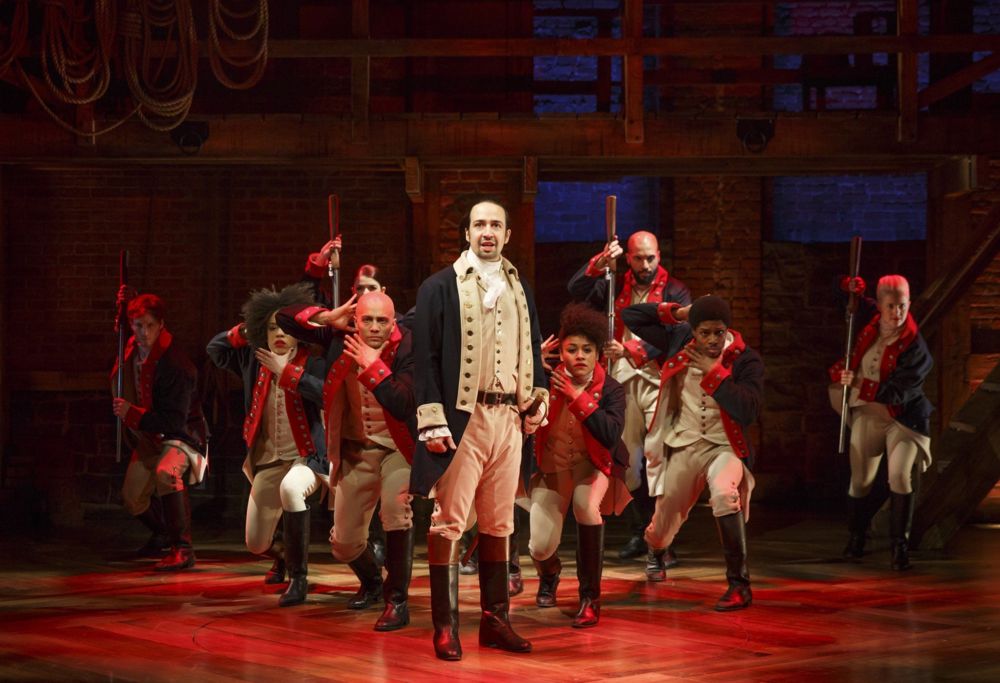
Image result for hamilton battle of yorktown
Our Founding Fathers = Rebels
The rebellion for early Christians was quieter than that of the American Revolution, but it was a rebellion nonetheless.  Threatened by an authority determined to control them, body, mind, and soul, early Christians defiantly gathered together in secret to worship, support each other, and spread their faith.  In the Roman arenas, surrounded by roaring crowds calling for their deaths, they stood by their faith.  They stood by each other.  They wrote to each other in support.  They wrote to each other from exile and from prison.  They continued to spread their message of love and God across the empire despite the risks.  Despite the law.

Because they knew the law was wrong.

They knew there was something beyond it.  Something better.  Something they couldn't fully understand, but were still willing to give their lives to uphold if necessary.  They rebelled, and had they had support from other groups, had greater, easier ways of having their voices heard, they might have rebelled louder.

Early Christians didn't simply decide to rebel because they wanted to, however.  They needed to, and they rebelled by example.  Christianity, at its heart, is a radical religion, because it is based around a radical figure.

Jesus was a rebel.    

I've always found it kind of funny when people justify their mistreatment of others by claiming to be following the teachings of Jesus and Scripture.  They use Jesus' name like a get-out-of-jail-free card for discrimination, bigotry, and hate, disguising their true intentions with the excuse "I'm only trying to save your soul from damnation."  How easily they seem to forget that Jesus dined with outcasts, promised his kingdom to those considered weak, and criticized the wealthy.

Jesus was a radical in his time because he openly defied socially accepted discrimination and oppression.  He pushed back against religious authorities who insisted they alone had the answers to knowing and interacting with God.  He spoke to crowds about radical ideas of what it means to love each other and show each other compassion.  He opened the doors to those previously excluded from salvation.  He knew what he risked in his defiance, in his resistance, but he didn't let that stop him.

Image result for table flip jesusHe taught his followers to turn the other cheek, and also took up a bull whip, flipped tables, and chased the greedy merchants from the temple.  He showed us that resistance is complicated, it's not always neat and tidy, but it's always necessary when those in authority try to decide who is worthy of salvation and who isn't.  When those with power try to keep the downtrodden low so they can maintain their own privilege.  He showed us that to rebel is sometimes necessary to be truly faithful to God.

To be Christian means to be willing to rebel when human dignity is put at risk.  To resist when groups of people are treated as second-class-citizens, whether or not you believe what they believe, or value what they value.  To hold those in power accountable for their actions when they choose money and greed over the good of the people.  To speak out whenever injustice threatens your fellow human.

We rebel, because like the early Christians, like Jesus himself, we have hope in a world better than this one that is worth fighting for.

Just as Christians are called to feed the hungry, give drink to the thirsty, clothe the naked, and welcome the stranger so too are we called to rebel.  Whether against the oppressive actions of a government, or the excluding teachings of a denomination, we resist, we march, we speak out.  And as long as there is suffering in the world, as long as there are people in need, whose voices have been stolen, and whose dignity is threatened, we won't stop.

We will always rebel.

Until next time,
Erin B.  


Sunday, November 20, 2016

When Art Speaks for the People: A Response to the Aftermath of the "Hamilton" Statement

Art is a unique and often underrated treasure in any society.  For most, we don't visit museums to learn about the economic and political structures of societies past (although some do, don't get me wrong).  We visit museums to see the art that was left behind.  We pay for overpriced tickets to see the Mona Lisa, Michelangelo's David, the ceiling of the Sistine Chapel, and Starry Night.  Throughout history, people have risked their lives to protect art from destruction, from burying Celtic crosses in Ireland during the Reformation, to forming special forces groups (The Monuments Men) in World War II to retrieve and hide artwork from the Nazis.  One of the first things to be criticized, banished, boycotted, or rejected in any society where the government is trying to assert absolute control over its people is art.  Artists are arrested and tortured, books are burned, murals and paintings destroyed, and theater productions shut down or censored because they dare to challenge the status quo.  Why?  Because art, in all its forms - music, painting, sculpture, writing, theater, etc. - is meant to challenge us and make us think.  It's meant to stir a person's deepest emotions, tell a story in a new and striking way, and express the greatest thoughts and concerns of its creator.  Sometimes, art does much more than this.  Sometimes, art is used to raise up the voices of the voiceless, publicly criticize injustice, oppression, and violence, and inspire bravery in those who wish to see the world change for the better.

That is what Hamilton: An American Musical is all about.

Image result for hamilton
From it's conception, Hamilton was always meant to tell the story of America by Americans.  That's why it's creator, Lin-Manuel Miranda, was so intentional about having a diverse cast, and about having diverse forms of music, most prominently rap, which he called "the music of the revolution."  Hamilton's story is one about standing up against oppressive forces that try to control us, and overcoming nearly impossible odds to "take our shot" and "rise up" in order to change the world.  It's an amazing piece of art that has been recognized worldwide as being inventive, challenging, and for telling a story that is just as relevant today as it was in 1776.  It's the story about an immigrant who came to the United States, fought for everything he had, was opposed at nearly ever step along the way, but never quit advancing and doing what he believed was right.  Alexander Hamilton himself was a flawed, hot-headed individual who is not without his critics today, but his story of revolution and the building of a nation for all Americans is one that continues to be lived out in our modern world.

When Hamilton's Broadway cast spoke after their November 18th show to Vice-President elect Mike Pence, they weren't only following the path of artists and artwork before them that spoke the concerns of the people.  They were also living up to the tradition of their namesake, Alexander Hamilton, and the rest of the Founding Fathers.  This is a nation built on protest and revolution, on opposing forces that threaten the well-being of all of its citizens.  So, it was not out-of-line for the cast of Hamilton to raise those concerns to Vice-President elect Pence.  What was out-of-line was for President-elect Trump to demand an apology.  What is out-of-line is all those now calling for a boycott of the show.  What was out-of-line was the individual who interrupted a performance of the Chicago show by shouting profanities and saying "we won, you lost, get over it."

Never mind that the statement by the New York cast was actually quite polite and respectful while at the same time remaining raw and honest about people's concerns.  Never mind that Vice-President elect Mike Pence has said he "wasn't offended" and actually really enjoyed the show.  It's actually not even a fundamentally wrong thing for people to want to boycott the show as a result, because it's their right to do so.  What is most concerning about this whole ordeal is that people do not believe the theater is an appropriate place for that kind of statement.  Trump himself tweeted that "The Theater must always be a safe and special place."  And it should be, but for those at greatest risk in society at large.  The theater, especially a show like Hamilton, is where the loudest critiques of government and society should come from for the very reason it should always be a safe and special place.

Art has always worked to hold those in power accountable for their actions.  We see this displayed in works of graffiti on city walls, in songs protesting acts of war and violence, in stories and poems written to express the fear and pain of the oppressed and subjugated.  When our nation's leaders start criticizing art and try to "keep it in it's place", try to dictate what is appropriate for it to depict, speak to, or act out, we need to be very concerned.  Being a good leader means accepting the criticism of your opposition, hearing the voices of your people most scared, and allowing dialogue to take place whether you like what is said or not.  We are a nation that claims to value freedom of speech, that allows for art to flourish and expand our collective understanding of the world we live in.  When we start trying to silence the art world, however, it's not just the artists that suffer.  We all do, because we are no longer challenged, we are no longer made to think about the world beyond ourselves.  It is the art of our society that will tell our story to future generations, and it is up to us to determine whether it will be a story about people who turned their backs on the injustice and fear surrounding them, or stood up and held those in power accountable, making them answer for their beliefs and actions.  There is a lot of work that must be done in this country, there are a lot of voices, beliefs, and opinions that must be taken into account, but it is through art that those voices, beliefs, and opinions are more widely heard and known.  So, even if you didn't agree with the cast of Hamilton's statement, you need to be ready to protect their right to make it, because someday you might need them to speak on your behalf as well.

Until next time,
Erin

The statement of the Hamilton cast, compliments of Twitter.