Showing posts with label Freedom of Religion. Show all posts

Friday, July 13, 2018

Religious Freedom, Adoption, and the "License to Discriminate"

Today, I want to talk about something that you might not even know is a major issue right now, but it could potentially be yet another great travesty in this country. Another way we mistreat and abuse one of our most vulnerable populations.

Our kids.

What I want to talk about is religious freedom, discrimination, and adoption.

Why am I focusing on this? Well, on Wednesday, July 11th, the House Appropriations Committee passed an amendment to the "Labor, Health and Human Services, Education, and Related Services Bill" for the 2019 Fiscal Year which would essentially allow "taxpayer-funded adoption agencies to deny LGBTQ families the ability to adopt a child based on religious objection".


This type of discrimination against same-sex couples seeking to adopt isn't new. Ten states already have laws that allow child welfare agencies to discriminate against couples: Alabama, Kansas, Michigan, Mississippi, North Dakota, Oklahoma, South Carolina, South Dakota, Texas, and Virginia. According to the Every Child Deserves a Family Campaign, more than 21,000 kids were awaiting adoption in these states in 2015.

This amendment would make this discrimination national.

Now, the amendment doesn't specifically say that child welfare agencies can discriminate against LGBTQ couples (even though we all know that's what they mean), but that the Federal Government cannot punish or take "an adverse action" against an agency that refuses services based on their "sincerely held religious beliefs or moral convictions". Some people might see this and think "that's what freedom is" or "they have a right to their beliefs". Some people might even agree that LGBTQ couples shouldn't be able to adopt (they'd be wrong, but they might still think it). But many advocacy organizations and individuals have already pointed out that this wording expands beyond LGBTQ discrimination. This could impact interfaith couples, single parents, couples in which one partner has been previously divorced, and any other type of couple the agency could find objectionable (if you don't think someone will try to use "religious belief" as a reason to deny a biracial couple an adoption, you haven't been paying attention).

This amendment is essentially a tax-payer funded "license to discriminate". It's an attempt to push the morals and values of a few onto the entire populace. And who suffers the most from these actions?

The kids.

The kids in the child welfare system praying to find a forever home. The kids bouncing from foster home to foster home, never experiencing true stability. Never having a real family. They are being denied stable homes and qualified, loving parents because those in power refuse to let go of their bigotry and hate.

This amendment is not a good thing. It doesn't support families. It doesn't protect our children. It's not about religious freedom.

It's about power. It's about control.

It's about maintaining a society that upholds the few over the many, and refusing to acknowledge or attempt to understand anything that doesn't fit into their "ideal" mold.

This is the kind of harm our current government is creating behind the scenes when we're distracted by the other atrocities around us. This is just another way the concept of religious freedom is abused and used as a weapon rather than a means of stability.

As someone who was adopted, I'm enraged by this amendment. As a human being, I'm deeply saddened for those kids and adults who just want to create families. Sexual orientation, religion, race, nationality, and marital status should never be used to measure the quality of a potential parent.

Will they be loving? Will they provide a safe and stable home? Will they protect their child? Will they work to give them every opportunity they can so that the child can grow and flourish?

Those are the things that should matter. The well-being of the child is what should matter.

However, this amendment shows that that's not what politicians truly care about. If this was really about the kids and what was best for them, this amendment wouldn't exist.

Vote in November. Speak out against this amendment. Show that you care, because it's clear those currently in power don't.

Erin B.

Tuesday, October 10, 2017

Birth Control, Religious Freedom, and the Systematic Policing of Female Sexuality

The recent rollback of the Obama administration's mandated birth control coverage is being hailed by some as a "victory" for religious freedom.  After all, if you're an employer and access to birth control goes against your religious beliefs, you shouldn't have to provide coverage to your employees, right?
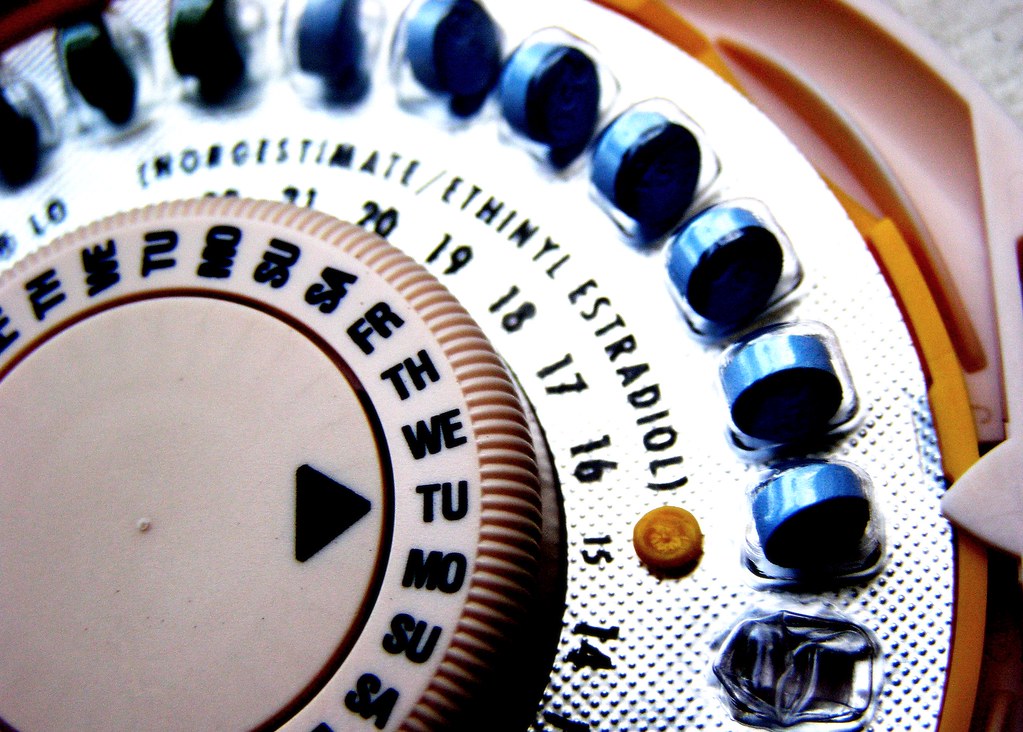
Image result for birth controlNever mind that birth control isn't just used to prevent pregnancy, but (among other things) to regulate women's menstrual cycles, help clear up severe acne, ease menstrual migraines, reduce/ease the effects of PMS, PMDD, menorrhagia, dysmenorrhea, polycystic ovarian syndrome, endometriosis, reduce the risk of ovarian cancer and endometrial cancer, and even reduce the risk of breast cancer for women with the BRAC1 and BRAC2 gene mutations.

Never mind that abortion rates drop when women have easy access to affordable birth control and reproductive health care, and teen pregnancy rates drop when they receive comprehensive safe sex education that includes birth control use.

Never mind that birth control restrictions have a greater negative impact on women physically, emotionally, spiritually, and professionally than on men.

Never mind all of that, because we must maintain our religious freedom even if it means denying women the healthcare that they need.  Right?

Wrong.

Despite what the religious right and even what such institutions as the Catholic Church would have us believe, the issue of birth control access isn't an issue about religious freedom.  It's not an issue about faith at all.  It is, and always has been, about control.

It's about controlling women's bodies.

It's about controlling women's sexuality.

Our modern debate over birth control has its foundation in the antiquated belief that female sexuality is something to be feared and contained.

A few clarifying points before I continue: In this discussion, when I use the term "sexuality", I'm not using it to refer to an individual's sexual orientation.  I use it to refer to the innate sexual nature that most (not all!) people possess.  I'm focusing in on faith perspectives, broadly Christian and at times specifically Catholic, because it is on these beliefs and perspectives that our current views on sexuality are founded.  Finally, I'll be talking specifically about the way women within the Christian faith are told to act and be in terms of sexuality.  When I use the phrase "women of faith" I am referring to the Christian faith broadly.  While much of what I will talk about crosses over and effects women outside of the Christian faith, they are the ones primarily impacted by the beliefs I will expound on.

All right, so let's begin with a simple question.

Can women of faith also be sexual?

Were you to ask most people of faith if they believed a woman's sexuality was an inherently bad or evil aspect of the individual, they would probably say no.  Ordained, lay, somewhere in between, whatever...ideally, most people of faith would not believe a woman's sexuality is a bad thing.  But as an organization...as a system of belief...that's another story.

It's not just that we're told not to have sex outside of marriage.  Sexuality isn't always about sexual acts.  It's about how we present ourselves...how we embrace and accept ourselves.  Yet piety and sexuality don't seem able to go hand-in-hand in the Christian faith.  We regulate sexuality, confining it to the bonds of marriage, and shaming those who step outside of those bonds.  The notion of sexual inequality between men and women is nothing new, but it's made starker in the Christian faith where the male form remains firmly the ideal and the female form somehow lesser.  Women are told to act a certain way so as not to cause temptation.  To dress a certain way so as not to draw attention.  To have certain expectations of ourselves and our "purity".  To be humble, and gentle, and loving, and submissive because that is simply our feminine "nature", whereas men are aggressive, and outspoken, and dominant.

The Christian Church is built on the foundation that sex is wrong, and female sexuality is particularly dangerous.  Though our modern ideals would shirk from these notions, we still maintain antiquated beliefs in what is good and bad about the human body based on the works of men that lived hundreds and hundreds of years ago when women were no better than property and God was firmly male.  St. Paul, Augustine, Aquinas...the patriarchs of our faith all held the view that there was something inherently sinful about sex, and that it needed to be contained.  St. Paul wrote that it was better not to marry, but if you couldn't control your sexual desires, better to be married than to burn.  Augustine believed that original sin was passed from generation to generation through the act of sexual intercourse.  Aquinas wrote that, according to natural law, sex must be used for the act of procreation, and anything outside of that intent is sinful.

Still, even sex within the bonds of marriage is not the ideal for some.  In the Catholic Church, celibacy is a mark of leadership.  Virginity is a mark of sainthood (though how often to we elevate a man to sainthood because of his virginity?).  Women religious were once cloistered away behind high convent walls and body-masking habits to preserve their purity and hide them away from prying eyes.  The Song of Songs is held up as some kind of love letter between God and the Church, or God and humanity, instead of the erotic poetry between a woman and her lover (doesn't ever say they're married) that it is.  We even stripped Mary of her sexuality, perpetuating her virginity though she was married, because sex was too great of a distraction from her work as Christ's mother, and too dirtied with sin for her to partake in it and still remain the pure image of femininity the Church wanted her to be.  And so, the feminine ideal we are presented in the Catholic faith is that of the humble, quiet, pious, virgin mother who was so free of sin that even sexual desire didn't darken her immortal soul.  

Where does such negativity come from?  Why does sex so often seem the root of all that is evil?  God made us sexual beings.  It's a basic part of our human existence.  Today, you can often hear people say that sexuality is as much a spiritual experience as a physical one.  That it's a gift from God to be cherished.

So why do we continue to fear it?

Could it be because we can't always control what triggers our sexual desires?  Is it because our sexuality is such a primal, natural part of our beings that it makes us more animal than human when we acknowledge it?  Is it because it steals us of our reason and distracts us from God's will?

And why women?  Why are women of faith put under so much more pressure than men to rein in their sexuality?

Eve was the one that tempted Adam into sin.  Women are weaker and so more susceptible to falling to the sins of the flesh.  They will drag men down with them.  They must be controlled.  We must protect ourselves from them, etc. etc.

You might think that these ideas and beliefs are crazy, but they remain foundational to us to this very day even if we don't recognize them.  They are reflected in what we are told is right and reverent, and what is inappropriate and disrespectful to God.

One glaring example of this is how women of faith are told to dress.  The way we dress is dictated in such a way as to hide our sexuality from the world.  We're told to cover ourselves, to dress a certain way to maintain an appropriate "modesty" in order to really respect ourselves.  In schools, especially religious schools, girls are put under more pressure by dress codes dictating what is "appropriate" for them to wear than boys are.  Buy why is that?  Why is the girl in a long skirt and baggy blouse somehow more pious than the girl in short-shorts and a low V-neck shirt?  Why does the amount of skin we show demonstrate our commitment to our faith?  Why is covering ourselves up and hiding our bodies away somehow a sign of our self-respect, and not our shame?  One of the first signs indicating that Adam and Eve had fallen from grace was their embarrassment over their own nakedness.  They covered themselves to hide their bodies because they were ashamed.  So why, instead of allowing women to embrace their bodies, do we associate the display of naked flesh with sin?

I work out.  I have nice legs.  If I want to wear a shorter skirt to show off my legs because I'm proud of them, is that really so wrong?

Does God really care?

"But Erin, we can't have women going around half-naked!  That's just not right!"

What about the female body is so wrong?  What about female sexuality is so wrong?

We don't tell women to cover themselves and downplay their sexuality because we think that's really what is best for them.  We do it because we don't want them to be a "temptation" for men.  How many times has a girl been sent home from school because her clothing was deemed "inappropriate", and the reason given for disciplining her was that she was a distraction to her male counterparts?  How many times have we explained away a rape or sexual assault by pointing to what the victim was wearing and saying she was asking for it?  How many times has a women been judged and called a slut simply because of her outfit?

But it's not just our clothes.  It's not just how we present ourselves.  It's not just how we talk about sex.  It's how our bodies are policed.  How control over our own bodies is taken from us.  In the Catholic Church, for instance, we're told that birth control is wrong because it blocks the possibility of procreation, but these decisions are being made by an institution where women have little to no say in regards to the laws and doctrines of their own faith.  These declarations are being passed down the ladder by the celibate men in charge who've never had to worry about irregular periods, or whether or not getting pregnant would have an effect on their job or possibly pose a risk to their health.  They don't know the physical strain a woman's reproduction cycle causes, and how much emotional and mental stress trying to keep track of everything can cause.

They don't see that.  The system that has built up around them, one which fears female sexuality and bodily freedom, won't allow them to see that.  Won't allow them to trust a woman with herself.  History has shown us that the dominant don't like to give up control and power...they fear what will happen if the dominated are empowered.

What's more terrifying to a patriarchal establishment than a woman in full command of her body and sexuality?

So, I don't celebrate the mandate rollback as a victory for religious freedom.  I see it as yet another form of oppression.  Another way to stifle female sexuality and belittle a beautiful gift from God.  Another demonstration of the power of those who are dominant in our Church and society, and what lengths they will go to to keep it.

But at the end of the day, aren't those the people who Jesus spoke out against the most?

Until next time,
Erin B.         

Friday, May 5, 2017

Christianity is Failing in the United States of America

Recently, I had the good fortune to attend Ecumenical Advocacy Days in Washington, D.C.  I didn't really know what to expect going into the conference, but I can honestly say it was one of the most rewarding experiences of my professional life.  Throughout those four days, I was challenged and encouraged, humbled and praised.  We heard from power-house speakers whose passion and dedication to social justice fueled my own.  I was made at some times to feel helpless, and at other times to feel powerful.  One instant filled with sadness, the next overwhelming joy.  I was enraged.  I was hopeful.  The world was laid out for me in all of its stark brokenness.  The curtain yanked back to reveal the wickedness within.  Then an image of the world as it could be, as it should be, was offered.  It was breathtakingly beautiful.  I was moved to tears nearly as often as to laughter.  I was invigorated.  I was motivated.  I was inspired.

I could go on and on about this conference, and spend hours and hours writing about everything I took away from it.  But there's one major takeaway that I really want to focus on in this moment, which is this...

Christianity is failing in the United States of America.

Let me explain.

When I say Christianity is failing in the United States, I don't just mean the Church is failing.  I don't mean it's failing because of the current trend of young people leaving the Church, essentially taking its future with them, although that's definitely a consequence of the failing.  I also don't mean that the U.S. has strayed so far from its Christian roots, both imagined and historically grounded, that it has lost its central values and is navigating the modern world with a broken moral compass.  No, none of that is what I mean when I say that Christianity is failing in the United States.

Christianity is failing in the United States because Christians don't love enough.  We say we do.  We love to talk about just how much we love one another, about how welcoming and hospitable we are towards each other.  When it comes down to it, however, when the call comes to stand up and demand justice, to protect the vulnerable, to challenge the status quo even at the risk of ourselves and our privileges, do we answer that call?

Some of us do.  Most of us don't.

We make excuses that the world is to broken, there's just to much, there's no way for any of it to be truly fixed anyway.  We obsess so much over a Kingdom of God that we envision far off in the future, an afterlife of perfection that is just waiting for us on the other side, that we don't try to bring the Kingdom to us in the here and now.  We put all of the responsibility of change and justice in God's hands, but don't bother to carry our fair-share of the burden.  We push our own agendas on others, disguising it as justice, instead of considering what is good for all people, not just ourselves.

Christianity is failing in this country because we satisfy ourselves with band-aid solutions to our societal problems, instead of digging in and looking at the true issues at the foundation of those problems.  During Ecumenical Advocacy Days, we focused a lot of our attention on Martin Luther King Jr. and his speech "Beyond Vietnam".  In this particular speech, he highlights the "triplets of evil": racism, materialism, and militarism.  Much of what was discussed during the four days focused on the impact and implications of these triplets, still as relevant today as they were 50 years ago when Dr. King wrote his speech, especially within the realm of politics.

People always say that politics don't belong in Church.  The separation of Church and State, for many, means that the Church has no right to try and sway people politically.  To some extent, this is true.  The Church is no place for Bipartisan politics.  The Church is no place for political agendas that don't benefit the majority of people.  But politics do belong within the Church.  And the Mosque.  And the Synagogue.  And the Temple.  Christians must be politically aware and active.  People of faith must be politically aware and active.  It is through our politics, through our government, that the nation's morality and priorities are displayed.  Right now, looking at our politics, the proposed policies and direction the government wants to head, the United States appears greedy.  Power-hungry.  Selfish.  Unconcerned with the most vulnerable and oppressed among its own people.  Unconcerned with the devastation we often leave in our wake around the world.

But what are we, specifically we Christians, doing about it?

Our preachers offer up shallow sermons and homilies.  They don't challenge us in our current context.  They don't address the concerns and realities we face day-to-day.  Yet, whenever a pastor or priest does try to speak to the injustices surrounding us, we criticize them.  Tell them it's not their place.

How often when we talk about Dr. Martin Luther King Jr. do we refer to him as Reverend Dr. Martin Luther King Jr.?  Why are we so easily able to make his faith a footnote of his life when it was the driving force behind almost everything he did?  Why are we so afraid to be challenged by our preachers?  To be challenged by our faith?  To challenge our faith and our faith leaders in turn?

Do we really think we're living out our faith when we turn away from injustice and corruption?  That we're spreading the Gospel message when we refuse to give up any of our creature-comforts so someone less fortunate can have at least what they need to not only survive, but thrive along with us?  That we're truly upholding the gift of Christ's sacrifice on the cross by blaming the poor and oppressed for their lot in life, instead of holding accountable the powers and systems that keep the poor poor and the rich rich?

If we, the people of the Christian faith, do not prioritize the needs and support of the poor and most vulnerable in this nation and this world...if we support or turn a blind-eye to policies that hold materialism and militarism over care of the hungry, the war-torn, the displaced, and the oppressed...then we fail to uphold our purported Christian values.  When white Christians refuse to recognize their innate privilege, refuse to understand how that privilege is built on the pain and suffering of people of color, and refuse to stand against it despite the cost, we fail.  When feminist Christians fail to recognize the extra barriers facing women of color, and don't first strive to catch them up before moving forward in the pursuit of gender equity together, we fail.  When older Christians scoff at young people's efforts for justice, lament at the lost of the young within the Church but don't actually take the time to understand that young people have lost faith in a Church they view as stagnant and passive, we fail.  If we, as Christians, keep our heads down and ourselves quiet because "I doesn't affect me", we fail.  If we don't reach out a hand of friendship and love to our Muslim brothers and sisters, standing up to those who would spread Islamophobia so that hate towards a community of faith is allowed to grow, we fail.  If we aren't enraged every time an unarmed black man is killed in the streets by police, we fail.  If we aren't deeply concerned about the injustice of our prison systems, and how people of color are disproportionately incarcerated to an alarming degree in this country, we fail.  If we don't fight to protect our environment, believing it a gift from God that is not ours to use and abuse, we fail.  If we don't raise our voices in protest when the health of our most vulnerable is put at risk because those in power have prioritized the profits of insurance companies over the well-being of the public they are meant to serve, we fail.  If we don't always work to show compassion and understanding to those whose backgrounds, experiences, and beliefs are different from our own instead of judging and condemning them, we fail.

We fail in living out the Gospel message of radical love, acceptance, and compassion.  We fail to appreciate the gift of the sacrifice that was the crucifixion.  To recognize our responsibility to each other and our world in light of the promise of the resurrection.  We fail Christ.  We fail God.

And in this failure, we forfeit the privilege to call ourselves Christians.

Yet, we are human.  We all will fail from time to time.  Our greatest failure, however, is when we refuse to recognize our own faults.  Our own shortcomings.  When we refuse to try and be better because our own stubbornness and certainty of our own righteousness blinds us to the pain and struggle of others.

Christians need to do better in this country.  We need to love more.  Listen more.  Fight more.  We need to let ourselves be challenged, and not shy away from conflict but embrace it as an opportunity to grow and learn more about our world.  Our faith is not a comfortable one.  We should not let our own comforts mean more to us than the justice of others.

We need to do better, but we can do better.  If we remember that our faith is not, at its heart, a faith of power and prestige, but a humble faith, a sometimes rebellious faith, yet a faith always centered on love and compassion, we stand a chance of getting it right.

That's what I witnessed at Ecumenical Advocacy Days.  Christians from all denominations coming together to do good and to fight injustice because their powerful faith would not allow them to sit on the sidelines and simply watch things happen.  It drove them to make their voices heard, and hold the powers that be accountable for their actions.  It gave me real hope that things can get better.  That things will get better.  We just need to stop using our faith as an excuse to do nothing, and recognize it as our reason to do everything we can to make this world a better place.

Until next time,
Erin B.

Below are some of the very notable plenary speakers from Ecumenical Advocacy Days.  Feel free to view and enjoy!


Tuesday, November 15, 2016

Politicizing Faith: The Real Threat to Our Freedom of Religion

Image result for constitutionIt's no secret that politics and religion tend to be two hot topics that seem to always be intimately entwined with one another in the public eye.  This is especially true here in the United States, where the First Amendment of our Constitution states that "Congress shall make no law respecting an establishment of religion, or prohibiting the free exercise thereof..."  Most people are familiar with this Amendment, and have very strong opinions about it one way or another.  Some use it to argue for the exclusion of all religious expression from any government-associated organization, and others, in all honesty, use it as a way of defending their own attempts to force their religious beliefs on others.

Catholics are no strangers to the almost constant tension between religion and politics.  On the surface-level, the United States Catholic Church seems to try and keep a neutral tone when dealing with politics.  Priests aren't supposed to endorse political candidates or try to sway their congregations one way or another when voting (though some do).  Both the Democratic and Republican party claim to value issues that Catholics themselves are supposed to be concerned for (however, social justice issues seem to always take a backseat to pro-life rhetoric), so technically speaking, a Catholic shouldn't hold allegiance to one party at all times, and should be open to exploring which candidate addresses the issues best that Catholics hold as important.  All very neutral and reasonable sounding...in theory.  In practice, the United States Catholic Church is far from neutral, and much of that has to do with the Bishops, their hard-line outspokenness on certain issues, and their insistence that our religious liberty is under attack.

Many Bishops are loud voices in the political arena, whether they admit it or not.  Here's why they're wrong to be.

Recently, a colleague of mine drew my attention to a blog-post that focused on the ten presidential/vice-presidential candidates for the United States Conference of Catholic Bishops (the winners have been selected, by the way, with Cardinal Daniel DiNardo of Houston-Galveston being elected president and Archbishop José Gomez of Los Angeles elected vice president).  The post was looking at how each of the ten Bishops have approached LGBTQ issues in the past, and, unsurprisingly, most of them didn't have very positive responses in their history (a few, surprisingly, did).  Many Bishops in the United States have been criticized for not embracing Pope Francis' more pastoral vision of the Church, which includes acknowledging the human dignity for people who identify as LGBTQ and ministering to them with love and compassion, even if the Church's stance on same-sex relationships has not changed.  The U.S. Bishops as a whole (I know there are individual exceptions) seem much more concerned with upholding dogma and keeping believers in line than encouraging dialogue and compassion towards not only LGBTQ issues, but also women's reproductive issues, and interfaith engagement.  Sound a little harsh?  Maybe, but that's the reality of the situation.

As I was reading about the Bishops, some of the actions several of them took in opposing LGBTQ rights was not only disappointing, but infuriating and appalling.  On Bishop barred LGBTQ people from public ministry, banned children of same-sex couples from Catholic schools, and voiced the desire to push anyone who isn't one hundred percent in line with Catholic teaching out of the Church so that it could be a smaller, more orthodox community.  Another Bishop opposed the teaching of LGBTQ history in public schools, and signed a letter opposing the re-authorization of an act that would protect women against violence because it included sexual orientation and gender identity as protected classes.  Another Bishop attempted to ban Catholics who supported same-sex marriage, simply supported it, from receiving communion, and another told Church workers they would lose their jobs if they supported same-sex marriage, and shut down ministry services to gay and lesbian communities.  These actions aren't just examples of poor leadership or a galling lack of compassion for people of faith, whether LGBTQ identified or not, these are dangerous mindsets that very influential people in the Church possess and act upon, despite the overwhelming majority of Catholic laity opposing such beliefs and actions.  Given the nation's current tumultuous political climate, coupled with the hate crimes that have taken place since the election, the discriminatory actions of these leaders needs to be seriously looked at and they need to be held accountable for their part in spreading hate and mistrust among American Catholics.

This isn't the only thing that the Church needs to be called out on, however.  In general, the United States Bishops' rhetoric that religious liberty in this country is under attack needs to be examined.  While reading the same blog-post, I stumbled upon a campaign the Bishops launched back before same-sex marriage was the law of the land called "Fortnight for Freedom", which was essentially a two-week campaign filled with prayer vigils, rallies, and other politically charged activities.  The message that the Bishops were pushing was that religious freedom is under attack in the United States.  Among the issues the Bishops cited to back up this claim was the idea that expanding LGBTQ equality, specifically same-sex marriage, as well as government-mandated birth control coverage for most employers were direct attacks on people's right to religious freedom.

Image result for obama
Whether or not you think he's a good president,
you have to admit, the man has a way with words
Here's the deal, religious freedom in this country means that everyone has a right to practice and express their own belief or faith, or non-faith, without fear of persecution or censure (unless your religious practices somehow harm others or impeded upon their own civil liberties).  It also means that we cannot force our religious beliefs onto other people, especially through legislation.  President Obama summed up this issue quite bluntly when he said "No, you can't deny women their basic rights and pretend it's about your 'religious freedom'.  If you don't like birth control, don't use it.  Religious freedom doesn't mean you can force others to live by your own beliefs."

Now, I'm not naive enough to believe that religion has no affect on politics and legislation whatsoever.  We are each formed by our faith and beliefs.  Our morals and values are shaped by our faith and beliefs, and they will be reflected in how we vote and who we vote for.  However, to claim that our religious freedom is somehow under attack because the rights and freedom of another group are upheld is ludicrous.  Christianity has been the dominant religion in this country for much of its history, so our politics and legislation up until now have obviously reflected the beliefs and values of that specific faith.  As our country becomes increasingly diverse and more religions and systems of belief come into the mainstream, a more balanced, neutral approach to people's rights is going to be necessary.  If Christian denominations don't support same-sex marriage, that's fine.  Churches are within their rights to say they will not perform or recognize those marriages.  Churches do not have the right to say the government has to refuse to recognize and perform those marriages, however, because the government is supposed to uphold and protect the rights of all people, not just a select few.  Churches can preach against the use of birth control, and push for abstinence-only education in private schools all they want, but they do not have the right to dictate on a national scale who has the right to birth control, or what kind of education public schools should be presenting.  Freedom of religion doesn't simply protect religions from government control, it also protects the people from religious control.

I'll probably get a lot of push back for this post, but the reality is that Christianity is not under attack in this country.  There is no war on religion (unless you're Muslim, let's be honest here), and no one is trouncing on your religious rights because they want to buy a cake for their same-sex wedding.  People are free to worship how they want, believe what they want, and that is the beautiful thing about this country.  Whether you think someone is right or wrong is totally your prerogative, but to force them to live how you think people should live and take away their freedom to choose their own path and their own life because your beliefs are different then theirs is about as un-American as you can get.

So, with all due respect to the Bishops, I think it's time they put more focus on ministering to the faithful, helping those in need, and supporting social efforts to create a better society on the whole, and spend a lot less time trying to control how people live their lives.  We're all just trying to figure out how to live in this world, how to be in relationship with each other, but we need to be able to choose for ourselves how we live.  As Catholics, we believe God gave us free will so that we could choose to be in relationship with each other and with God, but what good is that free will, how meaningful is that choice, when our religious leaders try to force the decision onto us by influencing our politics and legislation?  Our government is supposed to faciliate our right to choose, and our faith is supposed to help us make those choices...not take those choices from us.  

Until next time,
Erin