Showing posts with label Prayers of Sophia. Show all posts

Friday, July 13, 2018

Religious Freedom, Adoption, and the "License to Discriminate"

Today, I want to talk about something that you might not even know is a major issue right now, but it could potentially be yet another great travesty in this country. Another way we mistreat and abuse one of our most vulnerable populations.

Our kids.

What I want to talk about is religious freedom, discrimination, and adoption.

Why am I focusing on this? Well, on Wednesday, July 11th, the House Appropriations Committee passed an amendment to the "Labor, Health and Human Services, Education, and Related Services Bill" for the 2019 Fiscal Year which would essentially allow "taxpayer-funded adoption agencies to deny LGBTQ families the ability to adopt a child based on religious objection".


This type of discrimination against same-sex couples seeking to adopt isn't new. Ten states already have laws that allow child welfare agencies to discriminate against couples: Alabama, Kansas, Michigan, Mississippi, North Dakota, Oklahoma, South Carolina, South Dakota, Texas, and Virginia. According to the Every Child Deserves a Family Campaign, more than 21,000 kids were awaiting adoption in these states in 2015.

This amendment would make this discrimination national.

Now, the amendment doesn't specifically say that child welfare agencies can discriminate against LGBTQ couples (even though we all know that's what they mean), but that the Federal Government cannot punish or take "an adverse action" against an agency that refuses services based on their "sincerely held religious beliefs or moral convictions". Some people might see this and think "that's what freedom is" or "they have a right to their beliefs". Some people might even agree that LGBTQ couples shouldn't be able to adopt (they'd be wrong, but they might still think it). But many advocacy organizations and individuals have already pointed out that this wording expands beyond LGBTQ discrimination. This could impact interfaith couples, single parents, couples in which one partner has been previously divorced, and any other type of couple the agency could find objectionable (if you don't think someone will try to use "religious belief" as a reason to deny a biracial couple an adoption, you haven't been paying attention).

This amendment is essentially a tax-payer funded "license to discriminate". It's an attempt to push the morals and values of a few onto the entire populace. And who suffers the most from these actions?

The kids.

The kids in the child welfare system praying to find a forever home. The kids bouncing from foster home to foster home, never experiencing true stability. Never having a real family. They are being denied stable homes and qualified, loving parents because those in power refuse to let go of their bigotry and hate.

This amendment is not a good thing. It doesn't support families. It doesn't protect our children. It's not about religious freedom.

It's about power. It's about control.

It's about maintaining a society that upholds the few over the many, and refusing to acknowledge or attempt to understand anything that doesn't fit into their "ideal" mold.

This is the kind of harm our current government is creating behind the scenes when we're distracted by the other atrocities around us. This is just another way the concept of religious freedom is abused and used as a weapon rather than a means of stability.

As someone who was adopted, I'm enraged by this amendment. As a human being, I'm deeply saddened for those kids and adults who just want to create families. Sexual orientation, religion, race, nationality, and marital status should never be used to measure the quality of a potential parent.

Will they be loving? Will they provide a safe and stable home? Will they protect their child? Will they work to give them every opportunity they can so that the child can grow and flourish?

Those are the things that should matter. The well-being of the child is what should matter.

However, this amendment shows that that's not what politicians truly care about. If this was really about the kids and what was best for them, this amendment wouldn't exist.

Vote in November. Speak out against this amendment. Show that you care, because it's clear those currently in power don't.

Erin B.

Wednesday, February 28, 2018

The Trial - Chapter Four


The girl jerked as if startled to be addressed. When she managed to speak again, her voice was a barely audible murmur…but Isabel could hear every word as if the girl stood right beside her, speaking into her ear.

“I…I was at the Church one evening…I was bringing medicine to the Father…err…to this woman,” a quick glance towards Isabel, and then a downward sweep of lashes, “who was sick…I was walking beside the Chapel…it’s closed off from the rest of the Church, and I heard something. I thought it was just someone at their prayers, but then I recognized the words spoken over the Blessed Sacrament…”

Though this girl would have no understanding of the Latin, she would be able to identity that part of the Mass, having grown up hearing it.

The girl continued. “It was not uncommon for the Fathe…for the accused to hold private Masses, but it was growing late and he…she had been so ill, I did not think it good for…her to be alone. So I entered the chapel…”

Isabel stopped listening. She didn’t need to hear the rest. She remembered it all too well. The girl had entered the Chapel and found Isabel at the altar, performing the Eucharistic rites. Startled by the sudden and unexpected interruption, Isabel had whipped around, forgetting that she was not in full disguise. Why should she be? No one had dared disturb her when she was at her private prayer before. She had been ill that day, and so had forgone her formal priestly robes in favor of a worn Alb cinched tightly at the waist. The girl had seen Isabel’s outlined figure, illuminated by the candles lighting the altar, and her eyes had gone wide with comprehension and shock. She’d fled the Chapel before Isabel could speak a word to her.

Isabel had known it’d only be a matter of time after that. The Inquisition had come pounding on her door the very next day. She’d imagined them darkening her doorstep many times before, wondering how she would be caught, because she never doubted that she would be.

She’d just never thought her downfall would be at the hands of one of her own flock.


“Are you not nervous today, Juan? I admit to being quite terrified myself.”

Isabel turned to look at the young man who stood next to her, dressed in robes that matched her own. His bright gaze showed his fear, and his clasped hands trembled. Isabel offered him a kind smile.

“It will be all right, Mateo. This is a joyous day! We are about to commit ourselves and our lives to the work of the Lord!”

Mateo gulped, but nodded, offering a tremulous smile at her words.

“You are right of course, my friend. This is a joyous day indeed.”

It was the day of their ordination. The day they would officially enter into the priesthood, and be granted the authority to bring God’s grace into the world.

Isabel and Mateo stood with several others as they waited to process into the Cathedral as a group. Quickly and subtly, Isabel checked to make sure her disguise was thorough, but of course it was. She had lived as a man for years as she’d prepared for her ultimate destiny. It had become second nature to her to hide her figure, masking her breasts and hips with robes just slightly larger than was necessary. She’d allowed her hands to become roughened over the years so that some of their delicateness was hidden by calluses and cracked palms.

Hiding had been easier than she’d initially anticipated, especially within the walls of the humble seminary she’d run away to not long after she’d spoken with the old priest. There was no communal bathing, no show of nakedness. There was no concern of prying eyes as long as she was obedient, humble, and holy. She had been all those things, and so had managed to blend into her new identity as Juan, the eager seminarian.

Now, she would be Fr. Juan, and she would see God’s will finally done.

“It’s beginning!” Mateo whispered, excitement lacing each word.

Isabel drew herself up and folded her hands in front of her as the doors to the Cathedral’s sanctuary opened. Warmth filled her as she made her way down the long aisle towards the altar. In that moment, she felt nothing but absolute joy and the unwavering love of God shining down on her.

Saturday, February 10, 2018

The Trial - Chapter Three


The third examiner regained his composure the quickest.

“We have several witnesses willing to testify to your various acts of blasphemy.”

She could only imagine who they would bring in to condemn her. She was not without enemies. Not all appreciated her stalwart faith and assurance of God’s blessings, even if they had believed her to be a man all along.

“Bring in the first witness,” the second judge ordered.

Isabel waited, her chin high though her shoulders trembled with the weight.

A young girl stepped forward. Isabel hid her surprise, but felt her heart break. She recognized the girl from the parish she had been serving. She could not be that much younger than Isabel herself, probably fourteen or fifteen years of age. The girl looked terrified, her small frame shaking as she slowly moved to stand between Isabel and the judges.

She wouldn’t look at Isabel.

“Tell us child, have you ever witnessed this girl commit an act of heresy against our Holy Mother Church?” the third examiner asked, wasting no time.

Isabel closed her eyes and offered a brief prayer before the girl spoke. It was not a plea for help for herself, but one of forgiveness for the frightened girl. Isabel knew how it was to be so young and ignorant…to fear those who maintained such power over others. The girl’s words would no doubt prove even more ruinous to Isabel, but they would not be spoken out of hate.

They would come from a place of fear…a fear of powerful men who believed it their rite to dictate the lives of others. To promise salvation or condemnation, depending if their rules were followed. To proclaim what would be holy, and what would be profane.

To presume to know the will of God more thoroughly than those who have heard the direct voice of the Almighty.


For several years, Isabel tried to ignore the voice of God. Her mother’s words of warning and fear proved powerful enough to drive a spike of doubt into Isabel’s mind. Yet, she couldn’t make the voice disappear. It was persistent, first cajoling, then demanding. The call was relentless, always there in the back of her mind, never leaving her for a moment.

It was maddening.

At last, Isabel reached a point where she could take no more. She opened herself back up to her calling, and resumed walking the path made clear for her. Though her own acceptance of her call brought her peace of mind and calm, she worried what her mother would think.

What her father would do.

No. Isabel knew she could not go to either of them, but she felt she must speak with someone. She had no idea how to proceed on her own. So, she sought guidance from the priest of her small parish, believing if she explained it all, he would offer her direction and guidance to help her succeed.

Isabel was left disappointed.

“Our Lord, Christ Jesus chose only men to form the college of the twelve apostles, and the apostles did the same when they chose collaborators to succeed them in their ministry. The college of bishops, with whom the priests are united in the priesthood, makes the college of the twelve an ever-present and ever-active reality until Christ's return. The Church recognizes herself to be bound by this choice made by the Lord himself. For this reason, the ordination of women is not possible.” Once he had finished speaking, the old man stared at her, wrinkled hands folded in his robed lap.

Isabel blinked at him.
 
“Ummmm…but, Father, what of Saint Mary Magdalene?” 

It was the old Father’s turn to blink as if he did not comprehend her words.

“What about her?”

His tone was gentle, but patronizing. Isabel sensed that he did not take her seriously, but was humoring her.

“Was she not a favorite of the Lord? He appeared to her before any of the other apostles in his resurrected form, and she had the strongest faith of any of those close to him. Surely, she continued as a leader in the church after playing such a vital role in Christ’s ministry?”

The old priest smiled at her, but it was an indulgent smile. The kind an adult bestows on a child for doing something out of joyful ignorance.

“You are a clever girl, there is no doubt about that. However, Saint Mary Magdalene was not an apostle, and so not an official minister of the church in the way the other apostles were, as they were each appointed by Christ himself. She was, perhaps, a great helper to Peter and the others, but not a leader in her own right.”

Isabel opened her mouth to voice another question, but the old Father continued without noticing her.

“I can see how it would be confusing for such a young girl. Rest assured, my dear, that these issues and clarifications are made and resolved on your behalf by men with much more education and experience. It is the burden of those within the religious life to ask these complicated questions and determine God’s will for mankind. A burden, and a great privilege. We take on this responsibility so that you and the rest of the faithful may feel free to worship God with peace of mind, and with no distraction.”

“Yes, but Father, my question is not one of clarification…”

“It is natural for someone so young to have questions, and it is good that you have come to me seeking answers.” He reached out and patted her hand. “You are a good girl with great faith, I can see that, and I can see that you want to live your faith in the way you believe God is calling you. You have simply become confused, my dear. It is not to the priestly life that you are being called. It is impossible, and heretical, to believe such a thing, but you are young, as I have said. Your mind is easily clouded.”

Isabel frowned, but again, the old priest was speaking before she could force a word in.

“Perhaps you are being called to the religious life, in that the Father wishes you to take the veil and become a bride of Christ? There are many orders in the city that would be…”

Isabel stopped listening, frustration making her teeth clench. Though the life of a religious sister was a good and joy-filled calling for many, she knew it was not what she was meant for. With a sigh, she recognized that the man before her would prove no help. He did not believe her. He thought her a foolish child, and was too set in his ways to open himself to something new. To a different way of interpreting God’s word.

Would this always be the reaction to her call? Disbelief and dismissal?

Her frustration was overthrown by her growing anger. If she had been born a boy, there would be no question of her path…no barriers to block her way…

If she were a boy, no one would tell her she was wrong, or confused.

If she were a boy…

She shoved to her feet as an idea struck her, startling the old priest from his unending droning.

“Thank you, sir!” Isabel exclaimed, moving towards the door.

He stared at her with wide-eyes and a gaping mouth. Before he could say one more word, Isabel hurried from the room.

She knew at last what she must do, and she had no more time to waste with those who doubted her.

Tuesday, January 9, 2018

The Trial - Chapter One

“Heretic…”

The word seemed to echo around her.

“Heretic…”

It echoed because the witnessing crowd chanted it, slapping her with the word as if to brand it onto her.

“Heretic…heretic…heretic…”

The horde fell silent when another voice, brimming with hatred and authority, spoke.

“Isabel Andreu, you stand before this tribunal charged with heresy…”

She knew that. They’d told her as much when they’d dragged her from her cell the first time. They’d wanted her confession. She’d given them none.

They’d hurt her for her silence.

“You are accused of heretical propositions, having blasphemed on multiple occasions against our Holy Mother Church…”

She’d never spoken against the Church. It was her love of the Church, the true Church, that had driven her throughout her life.

“…as well as the desecration of the Holy Sacrament through your actions.”

She’d done God’s will, though the men before her would never admit that fact.

“What say you in response to these accusations?”

At length, she raised her head to find three pairs of dark eyes glaring down at her from their lofty seats of judgement. The finery of the men’s garments did little to hide the malice of their souls as they regarded her with open hostility. She could see her fate in their stares, the condemnation that would befall her no matter the defense she offered.

No matter the truth of her words.

Her body ached. Her arms hung shackled before her, the weight of the chains an agony on her torn muscles. Her legs shook as they fought to keep her standing. She had been given no stool to sit on, no platform to even rest against to relieve her distress.

They’d made sure she’d be able to stay upright, though the pain would be enormous. It was yet another form of torture, subtler and crueler than the rack; to force her to stand throughout a sham of a trial, when all her body desired was the bliss of unconscious oblivion. To give in, though, was to prove that she had been broken. That she was weak, when she must be strong. God had set her on the path to let the Almighty’s will be known, and she could not falter in her task. Though it cost her much to even speak, her words rang out strong and true.

“My lords, I deny these accusations against me with the utmost vehemence. I have spoken no blasphemy, committed no heresy. I have simply done what God has willed of me, and nothing more.”

They stared at her, their expressions ones of mingled disbelief and fury. She could only imagine the thoughts that must be racing through their minds. There she stood, a girl broken of body, but fortified of mind and spirit, challenging their power in front of a mass of witnesses thirsting for her blood.

Who was she to speak against them? Who was she to speak against a thousand years of teachings and tradition?

She was nobody.

She had no power. No wealth. No title. She’d been born into nothing, and would leave this earthly plane with nothing.

Yet, despite her apparent lack, she knew she possessed something far more valuable than gold or prestige. It was something the men before her would never know, would never find for themselves.

Purpose.

Blinded as they were by their own greed and ambition, they would never be able to see their true paths laid out before them. They would never know the true purpose of their lives.

She knew hers. God had show her what she was meant for long ago. She was assured of God's will for her, and no amount of pain or humiliation would make her doubt it.

As Isabel met the gazes of the men who sought her ultimate destruction, she remembered the day a nobody little girl first felt the life-altering, guiding hand of God.  


Isabel was shown her purpose in life for the first time when she was nine-years-old. 


Her mother and father had taken her, and her brothers and sisters, to the Catedral de Ávila to offer praise and thanksgiving for yet another victory by their illustrious warrior Queen and most holy Catholic King. Though they worshiped and celebrated, the battles of their sovereigns felt distant and foreign to young Isabel. She knew only the safety and peace of her home, the beauty of her family’s love, and the security of her faith. The dangers of the world could never breach the sturdiness of her city’s walls. Of this, she was sure.

Her family didn’t often go to the Catedral. It was only the most special of occasions that drew them away from their smaller parish to the more imposing fortress. Yet, this day they went and knelt with the countless others who had come to pray and receive Christ’s flesh.

Isabel was too young yet to understand the full majesty of her faith and the complexities of her Church. She knew that God was mighty, and was willing to punish as quickly as to bless. She knew that Jesus was God’s Son, but also somehow God. That part remained confusing for her. She knew that Mary, his mother, had been a Virgin and that she was made special above all the other saints. She knew her faith protected her from damnation, that she must be sorry for her sins and seek God’s forgiveness, but she did not yet know what either of those things, damnation and sin, were.

Above all, though, she knew that she must listen to the priest, for through his direction she could come to know God.

Perhaps it had been the setting of the Catedral. Perhaps it was that at nine, she was so much more aware of the deference she must show at Mass than she had been in years past. Perhaps it was simply that God appointed that moment to reveal Godself to her. Whatever the reason, that day, at that Mass, as the priest prayed over the bread and the wine, Isabel found she could not look away. She was riveted by the site of the ritual, captured like she had never been before by the motions and the recitation of the proper words. As she knelt with her family in the middle of the cavernous cathedral, the priest raised the host above his head and Isabel felt her breath leave her. A warmth engulfed her, and it was as if a light shone down on the priest and the host, illuminating its transformation from mere bread into the body of the living Christ right before her eyes.

Isabel stared in awe, and a realization struck her like a physical blow. The path of her life opened before her, and it was as if God spoke directly to her. She recognized God’s will for her. It was her vocation to bring that light to the world. That grace. To deliver God’s holy sacrament to the faithful and beyond.

She understood, in that moment, what God’s purpose for her would be…though she was still too young to understand the trials she would be forced to face.

Monday, October 2, 2017

The Aftermath of Las Vegas: Recognizing our Own Role in a National Tragedy

I honestly don't know how to comprehend today.

When I woke up and heard of the horrors that took place in Las Vegas, I was heartsick.  My first thought was "How could something like this happen?"

My second was a prayer for the victims and their families.

My third was "What excuses will people make this time?"

I dreaded going onto any social media sites because I was afraid that, among the heartfelt prayers and acknowledgements of the tragedy, I would also see excuses being made, accusations being thrown, and a side-stepping of the issues underlying this terrible event.

Or worse, I'd see nothing.  I'd see that we, as a society, have given up.

We need better gun control, and greater support for the mentally ill in this country.  That's it, the end.  I don't want to get into arguments with anyone about this right now.  Those facts are not the point of this post.  Those discussions...those arguments...will be had over and over again in the coming weeks, I'm sure, just as they've been had over and over again following every mass shooting that has happened in this country.

There's a bigger problem, though, that I want to focus on because it's one that no one talks about.  I think it's because no one wants to put a spotlight on it and highlight one of our greatest shames.

It's us.  It's we, the people.

It's the society we've allowed to build up around us.  The awful things we've normalized for ourselves.

It's our lack of empathy.

Our lack of reason.

Our lack of compassion.

Our lack of recognition that the world does not revolve around us.

We are selfish.  We are bullies.  We value our own privileges and comforts far more than the lives and well-beings of others.

You might be reading this and thinking, "That's not me!  I care!"  And I have no doubt that you do.

Individually, most of us aren't terrible people.  Most of us are good, loving, and just want the world to be a better place.

But have you ever avoided a conversation about gun control because it made you uncomfortable, or you didn't want to get "too political"?  Have you ever voted for someone you know has cut or plans to cut mental health services or support programs for the poor and disabled?  Have you ever hidden behind the words "We can't know God's plan" because it takes the responsibility to create change out of your own hands?

We might not think our actions and reservations have much effect on an individual level, but we don't exist in a vacuum.  We impact the way our society is shaped, even the things we don't say or do leave a mark, and our society reproduces the values and norms we feed into it.

What do the values and norms we see within our society say about us as a people?

As a whole we're broken.  As a collective, as a nation, we've created a society where this kind of tragedy is allowed to happen...and not just once.

It's allowed to happen again...and again...and again...

Las Vegas may be the deadliest, but it's not an anomaly.  Mass shootings have became a part of the cultural landscape of this country...and it's our own fault.

We don't care enough.  Not as a whole.  If we as a nation truly wanted to stop these tragedies from happening, we'd figure out a way to do it.  We'd come together...we'd work together.  We'd stop making excuses and actually do something.

The facts are we need more sensible gun control and greater support and care for the mentally ill.

But we also need more compassion.

More reason.

More empathy.

We need to see that this isn't an individual issue.  This isn't about us on a personal level, but about all of us together.  We need to recognize the broken society we've erected around ourselves and how deadly it's become.

These types of horrors will continue to plague us until we recognize that we, as a whole, need to step back and look at how we are systemically failing.  As individuals, we can send prayers, we can work to change laws, or keep them the same, but if we can't figure out how to work together...how to hold each other up rather than tearing each other down over and over again, nothing's going to get better.

We have a major problem in this country...we simply don't care.

This isn't how I originally intended this post to go.  I wanted to offer a prayer, some words of comfort for those struggling to wrap their minds around Las Vegas, but then I realized I'd said it all before.  I'd prayed it all before.  That doesn't mean I'll stop praying.  I will pray that the victims and families are able to find some comfort and hope in God, or whatever they maintain gives them life and purpose.  I'll continue to pray for this nation in a desperate hope that we figure it out and are able to heal ourselves.  I don't want to hide behind those prayers, though.  I don't want to say I've offered them, and then think I've somehow done my part.  I don't want people to just speak some nice words that give more comfort to the ones saying them than the actual victims and think that's enough.  More than prayers, right now we need a reality check.  We need to recognize this kind of thing isn't just going to go away, or that because we have not been personally affected that we can just easily forget it and go on with our lives.

Tragedies like Las Vegas will only keep happening until we as a collective come together and say "enough"...and actually mean it.

We have to refuse to let this be a norm in our society.  We have to refuse to let ourselves grow numb to it.

Until that day comes, until we can see beyond our own tiny worlds and understand that we're part of something bigger than ourselves, that we should care about something other than ourselves, nothing will change.  Nothing will get better.  It will only be more of the same.

Pray for Las Vegas.  Pray for our nation.  But then actually do something to make it better.

Amen.

Erin B.

Wednesday, January 25, 2017

Jesus Christ: A Model of Rebellion

Let's be real.  It's been a heck of a week.  A lot has happened, and a lot of people are feeling a lot of things.  I'm no exception.  I've unintentionally become that person on your social media homepage, constantly posting about politics and only seeming to be in a state of continuous anger.  Well, that's because I am angry, but that's not really why I post so much or speak so openly about my beliefs and opinions.  My goal is not to create fights or insult and undermine people who think differently than me.  My goal is always to inform, to pull the curtain hiding the real wizard back, and to make sure everyone knows exactly what is happening in the world around us.

Image result for planned parenthoodLast week, I posted a piece explaining how I define pro-life, and why I stand with Planned Parenthood.  I was extremely nervous to post that piece.  I was afraid of what some of my friends and family would think, and how they would react.  I was afraid of the things total strangers could say.  I wasn't afraid that people would disagree with me.  I know people disagree with me about that issue, and that's okay!  What I was most afraid of was that people would try to cut me down and belittle my message without any attempt at actual dialogue or respectful engagement.  Which is why I was pleasantly surprised when the feedback I received was, overall, incredibly positive.

Now, I'm not naive in that I think everyone who read it was 100% on board with what I had to say.  I'm sure there are many people that would tweak a few things here and there.  I'm also sure that there were plenty of individuals who totally disagree with me but simply chose not to comment on the post, and that's totally fine.  I can't, and don't, expect everyone who reads what I write to be in total, or any, agreement with me all of the time.

There were some comments, though, that weren't so positive.  I was accused of not being a good Catholic, not being in good standing with the Church, and of not putting my faith and God first.  Instead of feeling bad like I expected myself to feel, however, or regretting the post, those comments actually made me think a lot about my relationship with the Church and with God.  And I came to a realization.

My faith in God and my obedience to the Church are not the same thing.

Maybe those individuals are right, and I'm not a good Catholic.  Maybe I'm technically not in good standing with the Church.  Ultimately, though, I have to answer to God and my conscience, not the Church.

I love the Church, and I love being Catholic, but I'm not blind to the problems within the institution.  I'm not going to pretend everything is okay all the time.  The Church is a human institution trying to figure out how best to be in relationship with God.  It's going to stumble every once and awhile.  It's going to make mistakes.  It's going to sometimes be stubborn, and controlling, and try to make people fall into neat tidy lines because that's what people do.  We don't just bow down and accept the things we disagree with, especially when those things go against what we feel to be true in our hearts.  We push, we question, we demand accountability.  We live out our Christian faith by demanding that our Church continuously do better and better.  Sometimes, we even outright rebel.

Christianity, like the United States, is built on rebellion.

Image result for hamilton battle of yorktown
Our Founding Fathers = Rebels
The rebellion for early Christians was quieter than that of the American Revolution, but it was a rebellion nonetheless.  Threatened by an authority determined to control them, body, mind, and soul, early Christians defiantly gathered together in secret to worship, support each other, and spread their faith.  In the Roman arenas, surrounded by roaring crowds calling for their deaths, they stood by their faith.  They stood by each other.  They wrote to each other in support.  They wrote to each other from exile and from prison.  They continued to spread their message of love and God across the empire despite the risks.  Despite the law.

Because they knew the law was wrong.

They knew there was something beyond it.  Something better.  Something they couldn't fully understand, but were still willing to give their lives to uphold if necessary.  They rebelled, and had they had support from other groups, had greater, easier ways of having their voices heard, they might have rebelled louder.

Early Christians didn't simply decide to rebel because they wanted to, however.  They needed to, and they rebelled by example.  Christianity, at its heart, is a radical religion, because it is based around a radical figure.

Jesus was a rebel.    

I've always found it kind of funny when people justify their mistreatment of others by claiming to be following the teachings of Jesus and Scripture.  They use Jesus' name like a get-out-of-jail-free card for discrimination, bigotry, and hate, disguising their true intentions with the excuse "I'm only trying to save your soul from damnation."  How easily they seem to forget that Jesus dined with outcasts, promised his kingdom to those considered weak, and criticized the wealthy.

Jesus was a radical in his time because he openly defied socially accepted discrimination and oppression.  He pushed back against religious authorities who insisted they alone had the answers to knowing and interacting with God.  He spoke to crowds about radical ideas of what it means to love each other and show each other compassion.  He opened the doors to those previously excluded from salvation.  He knew what he risked in his defiance, in his resistance, but he didn't let that stop him.

Image result for table flip jesusHe taught his followers to turn the other cheek, and also took up a bull whip, flipped tables, and chased the greedy merchants from the temple.  He showed us that resistance is complicated, it's not always neat and tidy, but it's always necessary when those in authority try to decide who is worthy of salvation and who isn't.  When those with power try to keep the downtrodden low so they can maintain their own privilege.  He showed us that to rebel is sometimes necessary to be truly faithful to God.

To be Christian means to be willing to rebel when human dignity is put at risk.  To resist when groups of people are treated as second-class-citizens, whether or not you believe what they believe, or value what they value.  To hold those in power accountable for their actions when they choose money and greed over the good of the people.  To speak out whenever injustice threatens your fellow human.

We rebel, because like the early Christians, like Jesus himself, we have hope in a world better than this one that is worth fighting for.

Just as Christians are called to feed the hungry, give drink to the thirsty, clothe the naked, and welcome the stranger so too are we called to rebel.  Whether against the oppressive actions of a government, or the excluding teachings of a denomination, we resist, we march, we speak out.  And as long as there is suffering in the world, as long as there are people in need, whose voices have been stolen, and whose dignity is threatened, we won't stop.

We will always rebel.

Until next time,
Erin B.  


Thursday, July 21, 2016

We the People and the Bill of Rights: A Reflection on the Mistreatment of the Constitution

I haven't written in a while, but that's because so much has been happening, I don't even know where to start.  Given the current political climate, however, I think it would be good to reflect a little on American politics.  Don't worry, I'm not going to try and convince any one to vote one way over the other.  I'm a big believer in voting as your conscience and reason dictate, regardless of party affiliation.  What I would like to focus on today, though, is something a little more basic.  Something that makes up the foundation of our political structure, and outlines the freedoms citizens of the United States are privileged to.  That's right, I want to talk about the U.S. Constitution (get ready for a history lesson...this post isn't very faithy).


"We the People of the United States, in Order to form a more perfect Union, establish Justice, insure domestic Tranquility, provide for the common defense, promote the general Welfare, and secure the Blessings of Liberty to ourselves and our Posterity, do ordain and establish this Constitution for the United States of America." - The U.S. Constitution


People always love to cite the Constitution when making political arguments.  The two most common debates, of course, center on Freedom of Religion, and the Right to Bear Arms.  I've found, that much like using the Bible to win arguments, people like to pick and choose parts of the Constitution to justify their beliefs and actions.  Even to the extent of taking things out of context, or stretching words and ideas to make them fit with their own beliefs.  So, today, I'd like to reflect on how people have been misusing the Constitution, and why that misuse is contributing to our current state of political and social chaos.


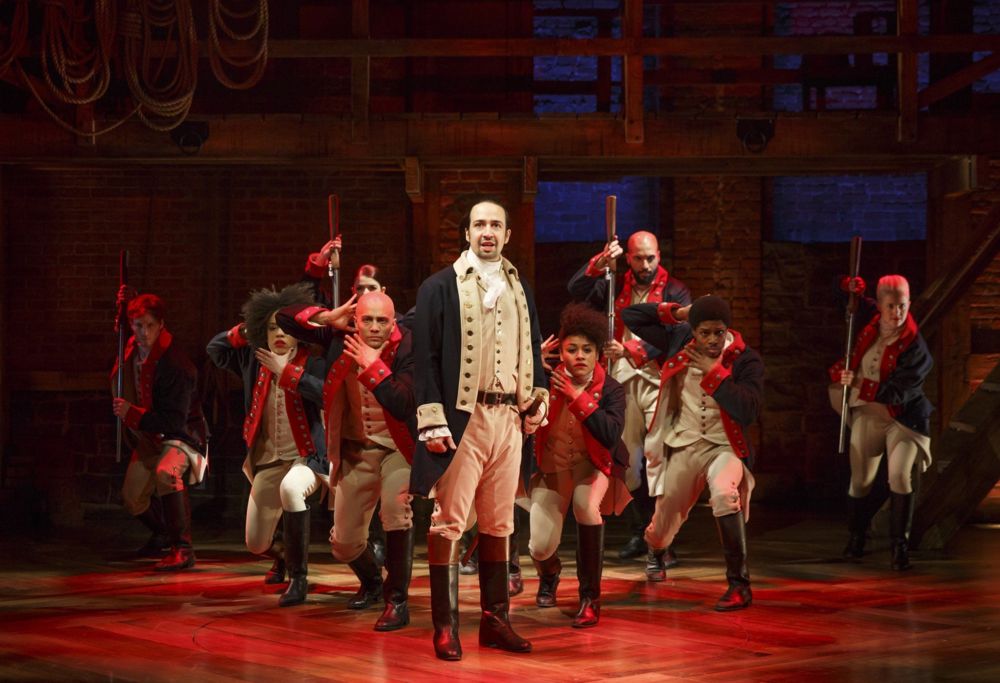
Lin-Manuel Miranda as Alexander Hamilton.  Epicness.
I'm currently obsessed with the hit Broadway musical Hamilton.  I haven't seen it, but I've listened to the soundtrack about a million times, have most of the songs memorized, and have devoured any news story about the show.  For those of you unfamiliar with the show, Hamilton tells the story of Alexander Hamilton, the youngest and one of the most controversial founding fathers.  In the song "Non Stop", Hamilton goes to ask Aaron Burr, a political rival who eventually kills Hamilton in a duel, if he will help him defend the newly written U.S. Constitution.  Burr immediately replies no, but Hamilton continues to try and persuade him.  Burr exclaims that "The Constitution's a mess!" to which Hamilton replies "So it needs amendments."  Burr follows up with "It's full of contradictions" and Hamilton shoots back "So is independence."  Ultimately, Burr did not help Hamilton go on to write the Federalist Papers, which were released to the public defending the Constitution (he did manage to get James Madison and John Jay to help him, and together they wrote eight-five documents, with John Jay writing five of them, James Madison writing twenty-nine, and Hamilton writing fifty-one...just a fun fact of the day).  What I like about this exchange between Hamilton and Burr is that is shows how complicated a document the Constitution is, and how much controversy there was over its development.  All this is to say that the Constitution is not divinely inspired.  It's not infallible.  It's a living document, with Amendments being added and taken away depending on the needs and realities of the citizens of the United States at the time.  What it's always trying to do, however, is protect the people of the United States.  It guarantees them freedoms so that they cannot be ruled over the same way the colonies were ruled over by Britain.  It guarantees a voice to all citizens, protection to all citizens, and keeps the government in check so that it doesn't forget it exists to serve rather than rule.  At least, that's what it's supposed to do.  When it is misused in attempts to gain power, marginalize people, or take away the rights of citizens, the whole system which is built upon it is broken in the process.

With that, I want to talk specifically about the Bill of Rights, that part of the Constitution most often used and abused in political discourse.


The Bill of Rights consists of the first ten Amendments to the Constitution.  They were drafted based on concerns from the states that the Constitution was giving the federal government to much power, and they wanted guaranteed freedoms spelled out for individual citizens (http://www.archives.gov/exhibits/charters/bill_of_rights.html).  Which was a legitimate concern on their part.  The U.S. had just fought its way out of British rule, which had imposed its rule on the colonies without any kind of concern for their context or care for their representation.  People wanted to make sure that they hadn't fought their way out from under one tyrant to turn away and create a new one.


Now, everyone knows the jist of the First and Second Amendments, but for the sake of context I'm going to write them out for you.


Amendment One:
Congress shall make no law respecting an establishment of religion, or prohibiting the free exercise thereof; or abridging the freedom of speech, or of the press; or the right of the people peaceably to assemble, and to petition the government for a redress of grievances.


Amendment Two:
A well regulated militia, being necessary to the security of a free state, the right of the people to keep and bear arms, shall not be infringed.


Now, as much as I would love to dive into these two Amendments right now, there is simply to much to talk about, so I'm going to save them for a second post. However, I would like to point out the fact that not only does the First Amendment protect the free exercise of religion in the United States (any religion...it doesn't specify Christianity only), it also states that Congress cannot establish a religion, meaning the government cannot mandate a national religion.  Ergo, the United States is NOT a Christian nation.  More on that later.


I doubt as many people who are familiar with the First and Second Amendments are as familiar with Amendments three through ten.


Amendment Three:
No soldier shall, in time of peace be quartered in any house, without the consent of the owner, nor in time of war, but in a manner to be prescribed by law.


Amendment three mostly deals with the practice British soldiers had of forcing their way into homes and onto farms for shelter, without the permission of the resident or land owner.  This isn't that big of a deal now, but it's nice to know that my home can't be taken over willy-nilly by the military to be used as shelter.


Amendment Four:
The right of the people to be secure in their persons, houses, papers, and effects, against unreasonable searches and seizures, shall not be violated, and no warrants shall issue, but upon probable cause, supported by oath or affirmation, and particularly describing the place to be searched, and the persons or things to be seized.

You know why in almost every Law and Order episode you've ever seen the police scramble to find a judge to sign a warrant to search a home?  Because it's in the Constitution that they have to.  People are protected from being randomly searched and having their possessions seized from them without just cause and a warrant.  This includes things like vehicles, so an officer cannot search a vehicle during a traffic stop if they don't have a warrant...or don't see anything illegal just laying on the seat.  It's really a protection of personal space.  You have a right to feel safe and secure in your own home.

Amendment Five:
No person shall be held to answer for a capital, or otherwise infamous crime, unless on a presentment or indictment of a grand jury, except in cases arising in the land or naval forces, or in the militia, when in actual service in time of war or public danger; nor shall any person be subject for the same offense to be twice put in jeopardy of life or limb; nor shall be compelled in any criminal case to be a witness against himself, nor be deprived of life, liberty, or property, without due process of law; nor shall private property be taken for public use, without just compensation.

This Amendment protects people being tried for crimes.  Yes, criminals are even protected in the Bill of Rights, because, guess what?  They're citizens too.  This is where we get the whole double jeopardy thing (can't be tried twice for the same crime), as well as the statement that life, freedoms, or property cannot be taken away without the due process of law.

Amendment Six:
In all criminal prosecutions, the accused shall enjoy the right to a speedy and public trial, by an impartial jury of the state and district wherein the crime shall have been committed, which district shall have been previously ascertained by law, and to be informed of the nature and cause of the accusation; to be confronted with the witnesses against him; to have compulsory process for obtaining witnesses in his favor, and to have the assistance of counsel for his defense.


Amendment Six lays out all of the rights an accused individual has in regards to their trial.  They have a right not to be stuck in court for years and years.  They have a right to be judged by a jury that is impartial and has no personal connection to the case.  They have a right to be told what and why they are being accused.  I find the why especially important myself.  They have a right to know who will be testifying against them, and have the right to choose witnesses for their defense, as well as a lawyer.  Basically, the Miranda Rights in all their Constitutional glory (this Amendment plus the Fifth that is).


Amendment Seven:
In suits at common law, where the value in controversy shall exceed twenty dollars, the right of trial by jury shall be preserved, and no fact tried by a jury, shall be otherwise reexamined in any court of the United States, than according to the rules of the common law.


Basically Judge Judy's favorite law.  It covers lawsuits and stuff.


Amendment Eight:
Excessive bail shall not be required, nor excessive fines imposed, nor cruel and unusual punishments inflicted.


This Amendment is, in my opinion, the Amendment most often broken.  It's common knowledge that some cities and systems use parking tickets as a way of creating income for themselves.  Such practices target the poor and marginalized, those least likely to be able to afford the excessive fines and bail that do exist and are imposed on them.  This freedom is the most often denied, even if no one will admit it or even realizes it.  It's meant to protect people from being taken advantage of, to keep someone with a parking ticket to become trapped in a web of debt and imprisonment.  But it often blatantly ignored, the most vulnerable of our society suffer as a result.


Amendment Nine:
The enumeration in the Constitution, of certain rights, shall not be construed to deny or disparage others retained by the people.


The Ninth Amendment is interesting because it basically gives the people right to other rights.  It's protecting rights of citizens that might not be specifically mentioned in the Constitution, but are important nonetheless.  Like the right to privacy for example.


Amendment Ten:
The powers not delegated to the United States by the Constitution, nor prohibited by it to the states, are reserved to the states respectively, or to the people.

Finally, Amendment Ten gives powers not given to the Federal Government to the states and people.  The people are guaranteed not only various rights, but power in determining the function of their government.  Yes, a select few are elected to represent the people, but it is a service they provide.  Politicians are supposed to serve their people, not themselves.  So often today, our politicians seem to only be looking out for their own self-interests and not for the people.  The people, in turn, are not innocent in this because we continue to elect the same type of people into power over and over again.  If we really want their to be change, we need to take control of our government back.  We need to recognize that the politicians do not rule over us.  The U.S. Constitution, the Bill of Rights, was created to ensure that we the people had a say in how things are run.  That we are protected from an overzealous government, and even from political parties who want to force their beliefs and ideals down everybody's throats.  The United States is supposed to be a country where people have the freedom, the opportunity, and the right to choose their own way of life.

Again, I'm not going to endorse any one candidate or claim any side in this political firestorm we have going on.  The only thing I want to do is encourage you to really think about who you are voting for this fall.  Will your candidate truly work to uphold the ideals of the Constitution?  Will they fight for the protection of all United States citizens, and not just a select few?  Will they work to give the people a greater voice in the running of the government?  Will they respect the beliefs and ideas of others, and not force anyone to believe in something they don't?  Will they respect that all citizens, no matter their background, ethnicity, faith, sex, or political party have rights that cannot be taken from them?  If your answer to any or all of these is no, then maybe it's time to rethink your vote this fall.

Until next time,

Erin B.


Sunday, June 12, 2016

A Prayer for Orlando

I am not a member of the LGBTQ community.  But that doesn’t matter.  I am not from Florida, don’t know anyone from Orlando, and have no personal loved ones who have been directly affected by the mass shooting that took so many innocent lives this past weekend.  But that doesn’t matter.  What matters is that I am human, and those who died were human.  What matters is the ease with which one individual was able to destroy so many lives, tear apart so many families, put an entire community in a state of fear, and a nation in shock.  What matters are the images of the mothers on TV, scared out of their minds because they don’t know where their children are.  What matters are the people whose friends were shot in front of them on a night that was supposed to be full of fun.  What matters are the people being carried, bleeding and afraid, and placed into the back of police trucks to be taken to the ER.  What matters is that this type of horror has happened before, and will continue to happen as long as people deny the hate that continues to permeate our society.  When we let out churches and religious leaders preach hate, we let the individuals who commit these atrocities feel justified in their crimes.  When we let our political leaders, our presidential nominees, discriminate against groups of people, encourage their voters to commit violence against the opposition, and publicly insult anyone who doesn’t agree with their point of view, we are compliant in the perpetuation of a society that turns its back on peace and compassion to embrace hate and violence.  When we try to control people’s love, try to tell people who they can and cannot love just because it makes us uncomfortable, we are the ones who take on a darkness in our soul.  If we actively work against love, it can only be hate that we brew.  That’s what makes it shocking, but not uncommon, for one disturbed individual to obtain a gun he shouldn’t be allowed to have and storm into an elementary school, a college, a church, or a nightclub to gun down innocent people.  When we allow a society of hate and fear to control us, to dictate our actions, we make it easier for these types of hate crimes and terrorist acts to take place.  We need to do better as a whole.  We all need to take responsibility for what happened in Orlando this weekend.  We need to wake up and see what our fear, our hatred, our distrust of others is doing to our world and our fellow humans.  It is with this thought in mind that I offer up this prayer:

I pray for the innocent victims of Orlando.  I pray for their families, their friends, and especially for those who claim to hate their community.  I pray that their hearts are profoundly changed, that they see how much harm their hate truly causes.  I pray that they realize that love and acceptance is the only way to truly achieve peace in this world.  I pray that individuals who harbor such darkness inside them that they lash out with no regard for the sacredness of human life come to understand how truly terrible their actions are.  I pray they realize that they are not “fixing” things with their actions, they’re not carrying out any type of message from God, and that they’re not teaching people “a lesson.”  They are simply making themselves into monsters, and destroying lives along the way.  I pray that the fear doesn’t overwhelm us.  I pray that, instead, we grow stronger in our commitment to the message of equality, the message that compassion and love are more powerful than fear and hate.  I pray that we each find the strength to stand up for what is right and good, and the courage to not turn our faces away when we see the hate and discrimination that takes place around us.  I pray that our country stops tearing itself apart, that our leaders start thinking about what is best for the people and not just for themselves, and that no community within our society ever feels isolated or targeted again.  I will hold this prayer in my aching heart for as long as it takes for it to come true. Amen.

Erin B.

Sunday, May 15, 2016

Approaching Pope Francis' Commission About Women Deacons With Cautious Optimism

I promise part three of "The Talk" is still coming, but something pretty amazing has happened that needs a bit of a spotlight right now...

Phoebe the Deacon!! Find her in Paul's letters.
We interrupt your regularly scheduled program for this breaking news: Women served as deacons in the early Church, and for the first time in forever, there is a new spark of hope that they'll be able to
serve in that role once again.  Someday.  Maybe.

Here's the deal.  During their triennial meeting with the Pope in Rome, the members of the International Union of the Superiors General (the leaders of the various women religious orders in the world), posed this question to Pope Francis:

"Consecrated women already work so much with the poor and the marginalized: teaching the catechism, accompanying the sick and the moribund, distributing communion, [and] in many countries conducting the common prayers in absence of priests and in those circumstances pronouncing the homily. In the church there is the office of the permanent diaconate, but it is open only to married and non-married men.

What impedes the church from including women among permanent deacons, just as it happened in the early church? Why not construct an official commission that might study the question?" (http://ncronline.org/news/vatican/francis-create-commission-study-female-deacons-catholic-church)

In answer, the Pope said that "he had spoken about the matter once some years ago with a “good, wise professor” who had studied the use of female deacons in the early centuries of the church. Francis said it remained unclear to him what role such deacons had.

“What were these female deacons?” the pontiff recalled asking the professor. “Did they have
Pope Francis with members of the IUSG
ordination or no?"“It was a bit obscure,” said Francis. "What was the role of the deaconess in that time?”

“Constituting an official commission that might study the question?” the pontiff asked aloud. "I believe yes. It would do good for the church to clarify this point. I am in agreement. I will speak to do something like this."

“I accept,” the pope said later. “It seems useful to me to have a commission that would clarify this well."" (http://ncronline.org/news/vatican/francis-create-commission-study-female-deacons-catholic-church)

Now, obviously, this is super exciting news, and could lead to some pretty historic, groundbreaking events as a result.  If women are able to be ordained into the permanent diaconate, they would be able to preach openly at Mass, and conduct marriage ceremonies as well as funerals and baptisms.  Women would be able to participate in the sacramental life in the Church in a way that hasn't been possible for them since the early Church.  This could, down the line, open up an even larger conversation about women's ordination into the priesthood (but let's not get to ahead of ourselves here...one step at a time)!

However, while I'm very optimistic at this prospect and the possibilities this conversation could have for the Church, I remain cautiously optimistic.  A tiny part of me, a cynical part that's been knocked down again and again, and has seen these and related concerns pushed into the corner or systemically ignored over and over, is a bit skeptical of how far this conversation will actually go.  Here's the thing: This question has been asked before.  Many times.  By clergy, by religious, by lay people, by scholars...the question of whether or not women should be permitted into the permanent diaconate is not a new one.  What's new and exciting about this whole situation is that this is the first time the question has been asked, and a conversation has been allowed to happen rather than the subject being immediately shut down.

Yay Pope Francis for being open to the dialogue and listening to the concerns of the women that posed the question!

That doesn't mean anything's going to happen beyond the commission, however.  The risk is that the commission will come to the conclusion that, no, women can't be deacons, and we'll be right back where we started.  Worse, because it will be even harder to restart the conversation again.  It's a necessary risk, don't get me wrong, because we'll never get anywhere without the commission and the conversation to begin with, but it's a gamble all the same.  So, a few things have to happen to ease my skepticism and convince me that this discussion is going to get the fair, honest treatment it deserves.  First off, the commission cannot be made up solely of clergy.  Perspectives from outside the Church's hierarchy are essential in order for the dialogue to be fully formed.  Second, notable theologians and scholars must be included, and a good chunk of them need to be women.  In his discussion with the UISG, Pope Francis acknowledged that women need to be included in the decision-making processes of the Church, something that they have been routinely excluded from because of their exclusion from ordination.  This would be the perfect opportunity to show that the Church is really moving towards that greater inclusion.  In order for a real decision to be reached about this vitally important issue, women's voices must be included.  And third, the voices of the people on the ground, the Church, must also be heard.  The regular people living out their faith day-to-day, witnessing the work that is being done in parishes, in schools, in hospitals, etc.  Work, primarily done, but good, faithful women.  Their witness should be a component of the overall discussion, and their work taken into account when deciding what it means for women to serve the Church.

So, yes, this is an exciting time in the Church, and an exciting opportunity for women's voices to be heard in a way that has been permitted in much of the Church's history.  However, even with a Pope like Francis in the lead, the hierarchy is still the hierarchy, with thousands of years of patriarchal doctrine and exclusion of women within its ranks weighing it down.  Major change like this will only happen if the Church as a whole makes it voice heard, so I encourage any of you who believe this to be the right direction for the Church to head in to speak up.  Talk to your local priest, write to your bishop, even write to the Vatican if you can (I've handily included Pope Francis' mailing address below)!  Let the hierarchy know that women deacons is something our Church not only wants, but needs.  We need to make our voices heard so that it's not the same few people making the same decisions over and over again.  Think about it, pray about it, and let the Spirit guide you, but whatever side of this question you fall on, don't hesitate to make your voice heard.

Until next time,
Erin B.

P.S. As promised, Pope Francis' mailing address:
His Holiness, Pope Francis
Apostolic Palace
00120 Vatican City  

Thursday, April 28, 2016

It's Time to Have "The Talk" - Part Two

When I was in middle school, I remember we had a special guest speaker come in to talk to us about chastity.  This wasn't a surprising thing for a Catholic school to do, and the speaker was charismatic and entertaining.  He used such romantic language as "true love", "princess", "happily ever after", and so on and so forth, making it sound like such a fairy tale to stay "pure."  By the end of the talk, most of my class willingly signed a "purity" card, promising to wait until marriage to have sex.


Years later, I'm thinking back on that talk, and realizing how screwed up it really was.


Let me begin by saying that this is not an anti-chastity post.  Chastity, truthfully defined as "the successful integration of sexuality within the person and thus the inner unity of [a person] in [his or hers] bodily and spiritual being", is a good thing (CCC, #2337).  It's an awareness and respect of one's own sexuality, and an understanding that sexuality is an integral part of the wholeness of the person.  It's a gift, and one that should be used responsibly.  Unfortunately, that's not what most people think of when the topic of chastity is brought into conversation.  Most people think that it is interchangeable with "virgin" or "pure", when it is in fact a term much more complex than either of those words.  But, you'll most likely come away from any chastity talk today with the idea that "chastity = not having sex", which, at the end of the day, has more potential for harm than good.

So, am I saying that the Church should do away with chastity talks?  No, I'm not.  What the Church does need to do, however, is reflect on and change the language that is used during those talks and the actual message that young people who hear them are receiving.  Specifically, the use of the word "pure", and the intensely gender-divided lessons.

When talking about chastity, what does it mean to say someone is "pure"?  Well, you're knee-jerk thoughts might be that that person is "clean", "wholesome", "unsullied", and "untouched".  But, digging a little deeper, what exactly does all that mean?  What are we really saying about someone when we call them "pure"?  To put it simply, pure = virgin.  Someone who has never had intercourse (even if they've done other stuff) is considered to be "pure" in the Church's eyes.  By that definition, then, the flipside would mean that non-virgin = used, dirty, unclean, sullied, broken, etc.  In other words, a non-virgin is automatically less of an ideal person than a virgin.

Let's pretend for a moment that you are a girl in high school, and a speaker comes to talk to your class about chastity.  You hear some things like "stay pure", "true love waits", "stay true to your future husband", "dress in a way that won't tempt guys" and so on.  Maybe the speaker uses some kind of imagery, like a white rose.  They hold up the rose and say that it's a representation of you when you're pure, and then squish it in their hand.  When they have another student try to straighten the squished petals out (and they obviously can't), they say that that's what happens when you give up your purity.  Maybe they take it one step further and compare women (yes, specifically women) to a clean, white piece of cloth, which they then get dirty.  They offer it to a boy in the crowd and ask if he would want to clean his hands with the dirtied cloth, and he naturally says no.  What's the lesson?  Guys don't want "dirtied" girls.  Super duper.

If you're a virgin, this might all sound just dandy for you.  But...what if you aren't?  What if you've already had sex?  Maybe you willingly chose to do it...maybe you were unwilling.  Either way, the message seems pretty clear: You're dirty.  You're used.  What respectable guy will ever want you now?  You don't think a young, impressionable high school girl who is bombarded daily with criticisms of herself from the media and society at large is going to come to these conclusions?  Sure, you can commit herself to "purity" from this point onwards...but the damage is done.  Instead of being uplifted, instead of choosing to wait because you know how important sex really is and why the Church considers it so sacred, you just feel more weighed down by guilt and fear.  Which, believe me, high school girls feel enough of in their day-to-day lives.

Even if you are a virgin, however, this language can still have negative consequences.  You come away from the talk with a fairy-tale understanding of how relationships work.  All you have to do is stay "pure" and you'll find your prince charming.  There's nothing about how naturally difficult relationships are, how much work goes into even the most successful ones.  And there sure as hell isn't any talk about how much work the sex part of a relationship will be, especially if you're completely ignorant of that area.  How will you shake the negative thoughts and ideas that you have about sex if you do get married and want to have it?  Won't you always see that part of your married life as a little bit dirty?  Plus, how is this talk going to color how you view girls you know have had sex?  Will you think less of them?  Will you avoid them, because you think they're bad or dirty?  Will you start judging others, instead of loving them?


Let's switch it up!  Now I want you to pretend you're a high school boy listening to a chastity talk.  Is what you hear going to have as big of an impact on you as it does the girls?  Are you going to feel as guilty, as dirty as a non-virgin female classmate?  Probably not.  Why?  Because while girls are most often told they need to remain pure to find love and get married, putting all the pressure on them to keep themselves "intact", boys are cast into the "prince charming", "true man", or protector role.  They are told the best type of girl to be with is a "pure" one, who will need to be protected.  There's nothing about mutually supporting each other in a relationship or partnership.  Boys are told that "pure" girls are delicate little flowers, and it's their job to make sure nothing "sullies" them.

Sure, this might not sound that bad at first glance, but these messages do nothing to empower young people, especially girls.  They're not keeping themselves "pure" because they have a right to control what happens to their own bodies, or a right to embrace their sexuality in the way they think is most wholesome.  No.  They have to stay "pure", or they will never find true love.  And for the boys?  When they say they need to be "true men", it's a very specific understanding of what it means to be a man.  Tough, strong, masculine, non-emotional, aggressive, take-charge...you get where I'm going with this?  Not all boys are going to fit into this mold of what it means to "be a man", and this is far from the only way to "be a man"!  However, when the Church is presenting it's understanding of what it means to be "pure" to young men and women, these deep gender divides in the language used and lessons taught feed into a much larger social problem.  This kind of divide leads to women who are opinionated and aggressive being labeled "bossy" or "bitchy", and for men who
display the same characteristics to be labeled "driven" and "assertive".  It's the divide that pressures men to keep their emotions buried, and for the norm for women to often be seen as "overly" emotional.  It's the divide that slut-shames girls and criticizes their bodies and the way they dress, while it's almost expected of men to engage in promiscuity (at least while young) and views those men who don't want to live up to that expectation as "unmanly".  It's the divide that makes certain men believe they can make decisions regarding women's bodies without involving women in the conversation at all.  It's the divide that leads some men to believe that it doesn't matter if a woman says no...


So what can we do instead?  What can the Church do to make chastity talks a more empowering, educational experience that the poorly-veiled guilt trips they really are?  Language is key here.  The language needs to change.  The word "pure" needs to be removed from the equation completely.  Just because a person is a virgin, does not mean they are "pure".  Just because a person has had sex, does not mean they are "impure".  Not all girls need to fit into the "delicate flower" mold, and not all boys need to fit into the "tough, emotionless, manly" mold.  People are complicated, men and women are complicated.  Chastity talks need to acknowledge the complexity of humanity, take into account the very different experiences of people, and recognize the spectrum of sexuality.  They need to switch the view from "stay pure and your life will be great" to "here's why your sexuality is important, and here's how taking care of it can make you a more holistic person."  The Church as a whole needs to rethink it's approach to the subject of sex, and a good place to start is rethinking the message that it's giving to young people through its chastity talks.

Stay tuned for Part Three of "The Talk", where I'll offer an alternative to "abstinence-only" ministry.

Until next time,
Erin B.