Showing posts with label Catholic Church. Show all posts

Saturday, March 24, 2018

The Trial - Chapter Five


The girl finished her story and waited, head bowed and trembling hands clasped in front of her.

“Very good, my dear,” the second examiner said. “Your testimony is accepted with our thanks, and the thanks of Holy Mother Church.” There was no need to even pretend at a cross examination. The girl scuttled back into the crowd without so much as a glance towards Isabel.

“Bring out the next witness…”

Isabel stood as witness after witness was paraded through to give testimony to her supposed sins. A few more were her own parishioners. Men and women who had come to her seeking guidance, prayer, and compassion were now turning on her as if she were a stranger they cared nothing for. Several fellow priests also testified, claiming to have suspected her all along when Isabel knew none of them had ever had a clue as to her true sex. They’d called themselves her friends. Her companions.

Now she could see them for what they truly were. Liars and cowards.

None of the witnesses’ words truly mattered that much, however. The first girl’s story had been more than enough to justify a conviction. The rest were just for show. A way to humiliate her and isolate her before she was marched to the pyre.

When the last witness had finished his statement and been dismissed, Isabel’s three examiners gazed at her with looks of triumphant self-righteousness. 

“I believe we have plenty to make a final judgement,” the third judge declared. His tone was neither outraged nor exultant. He spoke as if stating a simple fact. As if he were announcing that the sky was blue, and not signaling the start of her official condemnation.

They’d passed judgement on her long before that moment. It was merely to maintain the pretense that their justice was fair that a trial had been held for her at all.

The first of her condemners nodded in agreement with the third.

“We are all three in accord then?”

The fact that they didn’t even take time to confer was proof Isabel had never stood a chance before them. Anger and frustration sizzled in her blood, but she forced a deep breath, biting back a moan as it rattled her nearly broken body. 

She must remember that no matter their sentence…no matter her fate…God was with her. God had always been with her. They could hurt her, condemn her with earthly punishments, but her ultimate reward would be worth any pain she endured. She was right. Her path was good and true, and they were simply wrong.   
    
“Do you have anything you wish to say before your sentence is laid before you?” the second judge asked, his face a mask of false kindness while his eyes glittered with malice.

She did have something to say. She had many things to say, in truth, but so few of them actually mattered in that moment. Knowing nothing she said would lessen the severity of the punishment she must face, she settled simply for the truth. The truth she knew, deep down in her heart.

“I have broken the laws of man, and so it is man that punishes me. But I have done the will of God, and so God shall reward me just as surely as He shall condemn each of you.”

Their individual looks of rage were oddly satisfying, which she knew was spiteful of her. She thought that perhaps God would allow her that one sin, though, in the face of what was to come.

“Isabel Andreu,” the first examiner spat. Literal spittle ran down his chin, he was so infuriated. “This tribunal finds you guilty of all the crimes to which you are accused, foremost being that of heresy against our Holy Mother Church…”

I am no heretic. But you will never admit to it. None of you will.

“You refuse to repent of your sins. You refuse to acknowledge your transgressions against God and His Holy Church, and so we have no choice but to deliver upon you the most grievous of punishments…”

I will walk in the light of the Lord. I have done what has been asked of me to the best of my ability. My reward will be worth your punishment.

“We sentence you to death…”

In dying he destroyed our death…

“We sentence you to burn.”

In rising, he restored our life.

“May God have mercy on your soul.”

I am the Lord’s vessel. My soul is His to do with as He wishes.


She had to be taken to her execution in the back of a cart. After her trial, it no longer mattered if she could stand on her own. She’d be supported by the pole around which the fire would be built.

“Heretic! Heretic!”

The crowds had returned. This time, their cries were fevered with bloodlust. For the common people, executions could be so exciting, a breakup of their regular, often harsh lives.

They could be as entertaining for the people as a festival, especially when they weren’t the ones about to die.

Isabel barely registered their cries, however. She floated in that strange haze that existed between consciousness and oblivion. They’d tried again to break her, and by all accounts she had been broken. Her body was no better than a sack of loose bones. She should feel pain, but she only felt numb. The numbness was a blessing, she supposed.

Yes, they’d broken her body…but they’d never broken her spirit.

As she rattled down the cobblestone streets, jolted this way and that like a rag doll, she found herself oddly at peace. Even as the crowd began to pelt her cart with stones and rotten vegetables, her soul was untroubled. She was going home, she realized. She was going back to God. Why should she grieve at the prospect of such joy?

The cart came to a lurching stop that tipped her fully onto her side. Still, there was no pain. No sensation of any kind. Perhaps it was God’s own mercy, alleviating her agony in her final moments.
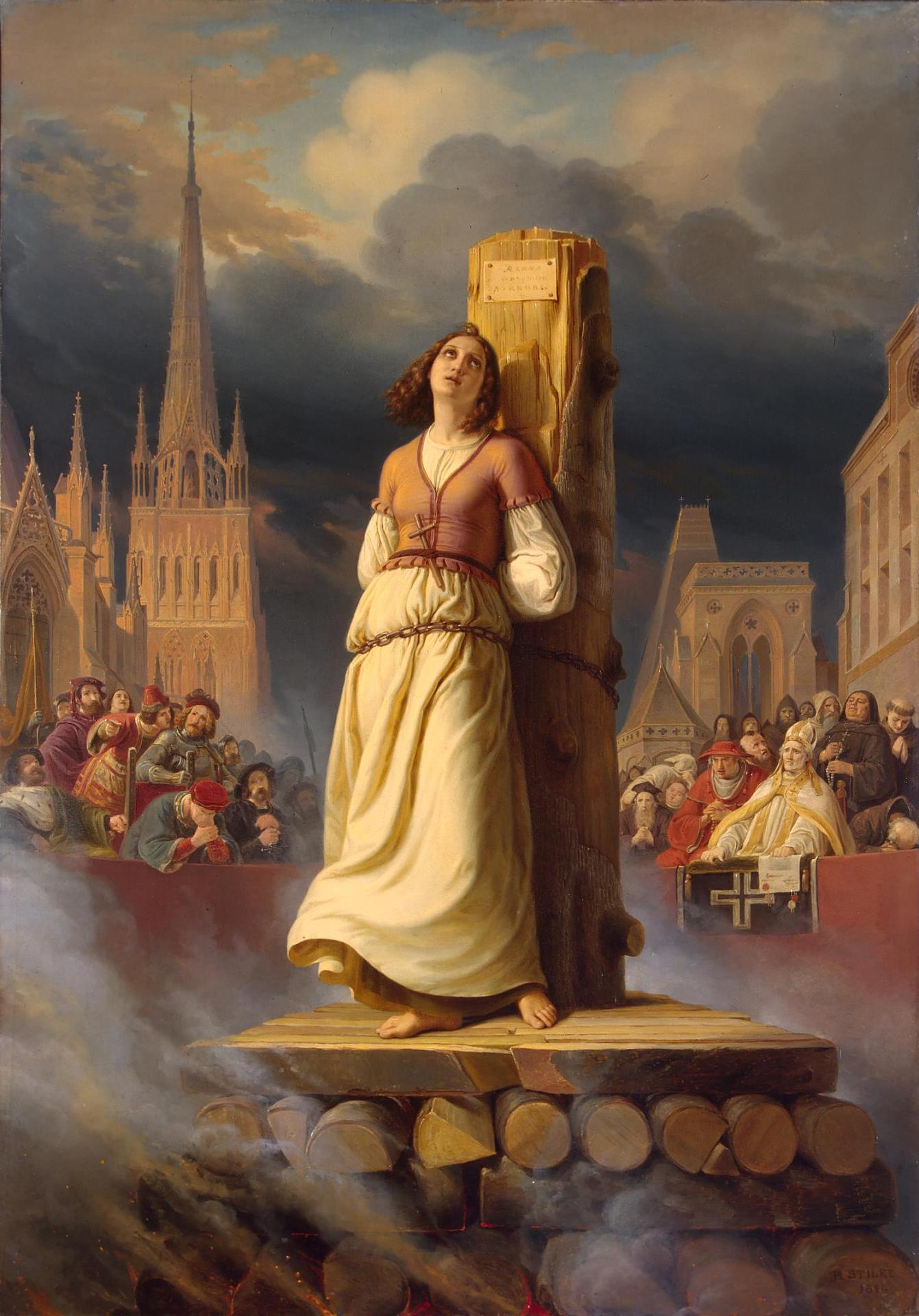
Image result for medieval execution burningTwo guards pulled her from the back of the cart. Her feet dragged uselessly behind her as they carried her to the large wooden pole that would serve as her vehicle into the next life. Neatly piled bundles of wood surrounded its base. It appeared someone had taken great care in their arrangement. That thought made her want to smile.

They tied her to the pole, tight enough that she wouldn’t slouch. Her legs offered her no support, so she was bound from ankle to neck. Even with her death imminent, that sense of peace remained.

Blinking, she tried to clear her blurred vision enough to see out into the crowd. They were many faces she recognized. Members of her parish, their expressions ones of disgust, rage, and relief. That last was no doubt because it was she who was tied to a pole and surrounded by bundles of wood, and not themselves.

Yet, there were others. Eyes wet with unshed tears. Faces filled with sorrow. Faces she’d gazed upon not so long ago from the pulpit as she’d preached God’s Word.

She would be grieved, then. It was a comfort to know…though she found she needed little comfort.

Her executioner asked her for forgiveness.

She gave it, readily.

He took a burning torch in his hand and touched it to the bundles at her feet.

Isabel closed her eyes, but not in fear. The heat of the fire caressed her face as it caught and grew around her. It reminded her of the Holy Spirit, manifested as flame as it descended on Christ’s disciples at the Pentecost. It was not the fires of Hell that surrounded her, devouring her flesh as a mob of her Christian brothers and sisters gazed on. It was a holy fire. A baptism. She was being reborn.

She felt no pain.

She felt no regret.

In the end, the blaze of her destruction faded away into the brilliant light of her salvation.

She’d done God’s will…and God was welcoming her home.        
  
The End

Wednesday, February 28, 2018

The Trial - Chapter Four


The girl jerked as if startled to be addressed. When she managed to speak again, her voice was a barely audible murmur…but Isabel could hear every word as if the girl stood right beside her, speaking into her ear.

“I…I was at the Church one evening…I was bringing medicine to the Father…err…to this woman,” a quick glance towards Isabel, and then a downward sweep of lashes, “who was sick…I was walking beside the Chapel…it’s closed off from the rest of the Church, and I heard something. I thought it was just someone at their prayers, but then I recognized the words spoken over the Blessed Sacrament…”

Though this girl would have no understanding of the Latin, she would be able to identity that part of the Mass, having grown up hearing it.

The girl continued. “It was not uncommon for the Fathe…for the accused to hold private Masses, but it was growing late and he…she had been so ill, I did not think it good for…her to be alone. So I entered the chapel…”

Isabel stopped listening. She didn’t need to hear the rest. She remembered it all too well. The girl had entered the Chapel and found Isabel at the altar, performing the Eucharistic rites. Startled by the sudden and unexpected interruption, Isabel had whipped around, forgetting that she was not in full disguise. Why should she be? No one had dared disturb her when she was at her private prayer before. She had been ill that day, and so had forgone her formal priestly robes in favor of a worn Alb cinched tightly at the waist. The girl had seen Isabel’s outlined figure, illuminated by the candles lighting the altar, and her eyes had gone wide with comprehension and shock. She’d fled the Chapel before Isabel could speak a word to her.

Isabel had known it’d only be a matter of time after that. The Inquisition had come pounding on her door the very next day. She’d imagined them darkening her doorstep many times before, wondering how she would be caught, because she never doubted that she would be.

She’d just never thought her downfall would be at the hands of one of her own flock.


“Are you not nervous today, Juan? I admit to being quite terrified myself.”

Isabel turned to look at the young man who stood next to her, dressed in robes that matched her own. His bright gaze showed his fear, and his clasped hands trembled. Isabel offered him a kind smile.

“It will be all right, Mateo. This is a joyous day! We are about to commit ourselves and our lives to the work of the Lord!”

Mateo gulped, but nodded, offering a tremulous smile at her words.

“You are right of course, my friend. This is a joyous day indeed.”

It was the day of their ordination. The day they would officially enter into the priesthood, and be granted the authority to bring God’s grace into the world.

Isabel and Mateo stood with several others as they waited to process into the Cathedral as a group. Quickly and subtly, Isabel checked to make sure her disguise was thorough, but of course it was. She had lived as a man for years as she’d prepared for her ultimate destiny. It had become second nature to her to hide her figure, masking her breasts and hips with robes just slightly larger than was necessary. She’d allowed her hands to become roughened over the years so that some of their delicateness was hidden by calluses and cracked palms.

Hiding had been easier than she’d initially anticipated, especially within the walls of the humble seminary she’d run away to not long after she’d spoken with the old priest. There was no communal bathing, no show of nakedness. There was no concern of prying eyes as long as she was obedient, humble, and holy. She had been all those things, and so had managed to blend into her new identity as Juan, the eager seminarian.

Now, she would be Fr. Juan, and she would see God’s will finally done.

“It’s beginning!” Mateo whispered, excitement lacing each word.

Isabel drew herself up and folded her hands in front of her as the doors to the Cathedral’s sanctuary opened. Warmth filled her as she made her way down the long aisle towards the altar. In that moment, she felt nothing but absolute joy and the unwavering love of God shining down on her.

Saturday, February 10, 2018

The Trial - Chapter Three


The third examiner regained his composure the quickest.

“We have several witnesses willing to testify to your various acts of blasphemy.”

She could only imagine who they would bring in to condemn her. She was not without enemies. Not all appreciated her stalwart faith and assurance of God’s blessings, even if they had believed her to be a man all along.

“Bring in the first witness,” the second judge ordered.

Isabel waited, her chin high though her shoulders trembled with the weight.

A young girl stepped forward. Isabel hid her surprise, but felt her heart break. She recognized the girl from the parish she had been serving. She could not be that much younger than Isabel herself, probably fourteen or fifteen years of age. The girl looked terrified, her small frame shaking as she slowly moved to stand between Isabel and the judges.

She wouldn’t look at Isabel.

“Tell us child, have you ever witnessed this girl commit an act of heresy against our Holy Mother Church?” the third examiner asked, wasting no time.

Isabel closed her eyes and offered a brief prayer before the girl spoke. It was not a plea for help for herself, but one of forgiveness for the frightened girl. Isabel knew how it was to be so young and ignorant…to fear those who maintained such power over others. The girl’s words would no doubt prove even more ruinous to Isabel, but they would not be spoken out of hate.

They would come from a place of fear…a fear of powerful men who believed it their rite to dictate the lives of others. To promise salvation or condemnation, depending if their rules were followed. To proclaim what would be holy, and what would be profane.

To presume to know the will of God more thoroughly than those who have heard the direct voice of the Almighty.


For several years, Isabel tried to ignore the voice of God. Her mother’s words of warning and fear proved powerful enough to drive a spike of doubt into Isabel’s mind. Yet, she couldn’t make the voice disappear. It was persistent, first cajoling, then demanding. The call was relentless, always there in the back of her mind, never leaving her for a moment.

It was maddening.

At last, Isabel reached a point where she could take no more. She opened herself back up to her calling, and resumed walking the path made clear for her. Though her own acceptance of her call brought her peace of mind and calm, she worried what her mother would think.

What her father would do.

No. Isabel knew she could not go to either of them, but she felt she must speak with someone. She had no idea how to proceed on her own. So, she sought guidance from the priest of her small parish, believing if she explained it all, he would offer her direction and guidance to help her succeed.

Isabel was left disappointed.

“Our Lord, Christ Jesus chose only men to form the college of the twelve apostles, and the apostles did the same when they chose collaborators to succeed them in their ministry. The college of bishops, with whom the priests are united in the priesthood, makes the college of the twelve an ever-present and ever-active reality until Christ's return. The Church recognizes herself to be bound by this choice made by the Lord himself. For this reason, the ordination of women is not possible.” Once he had finished speaking, the old man stared at her, wrinkled hands folded in his robed lap.

Isabel blinked at him.
 
“Ummmm…but, Father, what of Saint Mary Magdalene?” 

It was the old Father’s turn to blink as if he did not comprehend her words.

“What about her?”

His tone was gentle, but patronizing. Isabel sensed that he did not take her seriously, but was humoring her.

“Was she not a favorite of the Lord? He appeared to her before any of the other apostles in his resurrected form, and she had the strongest faith of any of those close to him. Surely, she continued as a leader in the church after playing such a vital role in Christ’s ministry?”

The old priest smiled at her, but it was an indulgent smile. The kind an adult bestows on a child for doing something out of joyful ignorance.

“You are a clever girl, there is no doubt about that. However, Saint Mary Magdalene was not an apostle, and so not an official minister of the church in the way the other apostles were, as they were each appointed by Christ himself. She was, perhaps, a great helper to Peter and the others, but not a leader in her own right.”

Isabel opened her mouth to voice another question, but the old Father continued without noticing her.

“I can see how it would be confusing for such a young girl. Rest assured, my dear, that these issues and clarifications are made and resolved on your behalf by men with much more education and experience. It is the burden of those within the religious life to ask these complicated questions and determine God’s will for mankind. A burden, and a great privilege. We take on this responsibility so that you and the rest of the faithful may feel free to worship God with peace of mind, and with no distraction.”

“Yes, but Father, my question is not one of clarification…”

“It is natural for someone so young to have questions, and it is good that you have come to me seeking answers.” He reached out and patted her hand. “You are a good girl with great faith, I can see that, and I can see that you want to live your faith in the way you believe God is calling you. You have simply become confused, my dear. It is not to the priestly life that you are being called. It is impossible, and heretical, to believe such a thing, but you are young, as I have said. Your mind is easily clouded.”

Isabel frowned, but again, the old priest was speaking before she could force a word in.

“Perhaps you are being called to the religious life, in that the Father wishes you to take the veil and become a bride of Christ? There are many orders in the city that would be…”

Isabel stopped listening, frustration making her teeth clench. Though the life of a religious sister was a good and joy-filled calling for many, she knew it was not what she was meant for. With a sigh, she recognized that the man before her would prove no help. He did not believe her. He thought her a foolish child, and was too set in his ways to open himself to something new. To a different way of interpreting God’s word.

Would this always be the reaction to her call? Disbelief and dismissal?

Her frustration was overthrown by her growing anger. If she had been born a boy, there would be no question of her path…no barriers to block her way…

If she were a boy, no one would tell her she was wrong, or confused.

If she were a boy…

She shoved to her feet as an idea struck her, startling the old priest from his unending droning.

“Thank you, sir!” Isabel exclaimed, moving towards the door.

He stared at her with wide-eyes and a gaping mouth. Before he could say one more word, Isabel hurried from the room.

She knew at last what she must do, and she had no more time to waste with those who doubted her.

Monday, January 15, 2018

The Trial - Chapter Two

“You are an evil, spiteful creature.” The head of her tribunal spat just as a viper would spit venom.

She regarded him for a moment before speaking. He was a fat little man, bloated with noxious gases and self-worth.

“Sir, if it were possible for you to remove my heart and examine it, you would find within it no amount of malice.”

“My dear girl, please.” Another of her judges spoke in a voice meant to lull and calm. “This will go much easier for you if you admit your guilt and repent of your sins.” He was thinner than the first, younger, but much more dangerous in his false kindness. Her confession would be their triumph, but it wouldn’t save her from her fate.

“I have nothing to confess. All I have done, I have done to achieve God’s will.”

“She is mad,” the final examiner declared with a shake of his head. He was not so fat as the first man, but not as thin as the second, and clean shaven. Just as his appearance appeared halfway between the other two judges, so too did his demeanor. He exuded neither great rage nor false care, but instead appeared almost indifferent to her plight. She took him to be the most honest of the three, unconcerned with impressing the witnesses around them, or trapping her in a web of deception and twisted words.

“She is possessed,” the first judge countered. “The Devil himself resides within her.  She is his instrument.”

“She is a woman.” The second judge nodded in agreement. “Her whole sex is far more delicate in constitution, and so much more susceptible to the powers of Hell.”

Isabel stood silent, waiting as the three men bickered back and forth about her state of being. They were like children who had been caught in mischief, and were making excuses for their behavior, convincing their own selves of the truth of their words.

Let them bicker. Let them believe her possessed, or weak because of her sex. In the eyes of God, there was neither man nor woman. God did not limit grace to one over the other. God had chosen her, as God had chosen so many men before her.

When the three continued in their bickering, Isabel fought back a sigh of frustration. Could they not get this over with?

“What proof have you of the crimes I am accused of committing?” she demanded to know, interrupting them.

All three turned to stare at her, no doubt shocked by her authoritative tone. She spoke to them as she imagined the great Queen Isabella might, with strength and confidence. A greater authority than these men possessed stood at her side, guiding her way and clearing her path. They would continue to hurt her, there was no doubt of that. Kill her, even. But they would never break her.

Only one person had ever come close to accomplishing that.


“But, mama, why can I not?”

Isabel’s mother let out a deep breath of frustration, pausing in her work tending their small garden to glance over her shoulder at her daughter.

“It is not allowed,” she answered in a firm tone. “Tis blasphemy to even speak such a thought, but you are a child and cannot be blamed for your ignorance.”

A warm spring breeze played with a tendril of her dark hair, but Isabel swiped at it, annoyed and unsatisfied by her mother’s response. “I am not a child! I am thirteen years this summer, and know my own mind and my call. It is God’s will…”

Image result for medieval garden“Enough of this!” her mother snapped. She stood from her crouch over the soil and turned fully to face Isabel. Her expression was severe, tightening her weathered face, which had once held such beauty before life had imprinted its hardships on her. Her bright dark gaze was tinged with worry and impatience, her full lips thinned into a tight line. “You are just a girl now, but you must learn to mind your tongue and not speak of such things. God’s will for you is to someday marry and bear your husband children. He would not call you to a station so impossibly out of your reach, contradicting the teachings of His Own Church. This is a foolish fantasy, and you must put it aside and face reality.”

But it was not a foolish fantasy. Isabel was certain of that. When she had first been graced with God’s call to her, she had been so young, and oblivious to the difficulties that lay before her in answering that call.

She had told her mother and father about her path that same day it'd been opened to her. They had dismissed it as childish fancy.

When she continued speaking of it, their dismissal evolved. For her mother, it had turned into a fear that she tried to temper with maternal affection. For Isabel’s father, it had turned to anger.

She suspected, though, that his anger was also rooted in fear. It was a fear she had never understood. If God had shown her the path of her life with such vividness, what had she to fear by following it?

“Mama, I…”

Her mother shook her head sharply. “I said no more. One more word, and your father will hear of it by day’s end.”

That did make Isabel pause. Not with doubt, but from fear of a lashing. She dropped her chin and stared at the ground, fighting to keep the tears that threatened to fall from spilling.

“Yes, mama,” she murmured.

There was a pause, and then her mother drew close, her hand coming to rest on Isabel’s shoulder. Gazing up, she met her mother’s saddened eyes and soft smile.

“You are a good girl, Isabel.” Her tone was gentle and soothing, but layered with unmistakable sorrow. “Strong, and faithful…and I have no doubt you truly believe what you say God has called you to. You must understand, my sweet, that it is simply not possible. To even attempt to pursue that life would mean your death.” She wrapped both arms around the girl in a sudden and desperate embrace. She smelled of freshly turned earth and sunshine, the comforting scents at odds with her pleading whisper. “Please, put it from your mind. For my sake, if not for your own. I could not bear it if I lost you.”

At a loss for words, Isabel encircled her mother’s waist with her arms and returned her embrace. Could obeying God in this matter truly lead to her death? The idea had never occurred to Isabel before.

And if her call was meant to bring joy…why was it causing her mama such pain?

As she stood surrounded by the warmth and safety of her mother, Isabel felt the first tendrils of doubt begin to unfurl within her.

Tuesday, October 10, 2017

Birth Control, Religious Freedom, and the Systematic Policing of Female Sexuality

The recent rollback of the Obama administration's mandated birth control coverage is being hailed by some as a "victory" for religious freedom.  After all, if you're an employer and access to birth control goes against your religious beliefs, you shouldn't have to provide coverage to your employees, right?

Image result for birth controlNever mind that birth control isn't just used to prevent pregnancy, but (among other things) to regulate women's menstrual cycles, help clear up severe acne, ease menstrual migraines, reduce/ease the effects of PMS, PMDD, menorrhagia, dysmenorrhea, polycystic ovarian syndrome, endometriosis, reduce the risk of ovarian cancer and endometrial cancer, and even reduce the risk of breast cancer for women with the BRAC1 and BRAC2 gene mutations.

Never mind that abortion rates drop when women have easy access to affordable birth control and reproductive health care, and teen pregnancy rates drop when they receive comprehensive safe sex education that includes birth control use.

Never mind that birth control restrictions have a greater negative impact on women physically, emotionally, spiritually, and professionally than on men.

Never mind all of that, because we must maintain our religious freedom even if it means denying women the healthcare that they need.  Right?

Wrong.

Despite what the religious right and even what such institutions as the Catholic Church would have us believe, the issue of birth control access isn't an issue about religious freedom.  It's not an issue about faith at all.  It is, and always has been, about control.

It's about controlling women's bodies.

It's about controlling women's sexuality.

Our modern debate over birth control has its foundation in the antiquated belief that female sexuality is something to be feared and contained.

A few clarifying points before I continue: In this discussion, when I use the term "sexuality", I'm not using it to refer to an individual's sexual orientation.  I use it to refer to the innate sexual nature that most (not all!) people possess.  I'm focusing in on faith perspectives, broadly Christian and at times specifically Catholic, because it is on these beliefs and perspectives that our current views on sexuality are founded.  Finally, I'll be talking specifically about the way women within the Christian faith are told to act and be in terms of sexuality.  When I use the phrase "women of faith" I am referring to the Christian faith broadly.  While much of what I will talk about crosses over and effects women outside of the Christian faith, they are the ones primarily impacted by the beliefs I will expound on.

All right, so let's begin with a simple question.

Can women of faith also be sexual?

Were you to ask most people of faith if they believed a woman's sexuality was an inherently bad or evil aspect of the individual, they would probably say no.  Ordained, lay, somewhere in between, whatever...ideally, most people of faith would not believe a woman's sexuality is a bad thing.  But as an organization...as a system of belief...that's another story.

It's not just that we're told not to have sex outside of marriage.  Sexuality isn't always about sexual acts.  It's about how we present ourselves...how we embrace and accept ourselves.  Yet piety and sexuality don't seem able to go hand-in-hand in the Christian faith.  We regulate sexuality, confining it to the bonds of marriage, and shaming those who step outside of those bonds.  The notion of sexual inequality between men and women is nothing new, but it's made starker in the Christian faith where the male form remains firmly the ideal and the female form somehow lesser.  Women are told to act a certain way so as not to cause temptation.  To dress a certain way so as not to draw attention.  To have certain expectations of ourselves and our "purity".  To be humble, and gentle, and loving, and submissive because that is simply our feminine "nature", whereas men are aggressive, and outspoken, and dominant.

The Christian Church is built on the foundation that sex is wrong, and female sexuality is particularly dangerous.  Though our modern ideals would shirk from these notions, we still maintain antiquated beliefs in what is good and bad about the human body based on the works of men that lived hundreds and hundreds of years ago when women were no better than property and God was firmly male.  St. Paul, Augustine, Aquinas...the patriarchs of our faith all held the view that there was something inherently sinful about sex, and that it needed to be contained.  St. Paul wrote that it was better not to marry, but if you couldn't control your sexual desires, better to be married than to burn.  Augustine believed that original sin was passed from generation to generation through the act of sexual intercourse.  Aquinas wrote that, according to natural law, sex must be used for the act of procreation, and anything outside of that intent is sinful.

Still, even sex within the bonds of marriage is not the ideal for some.  In the Catholic Church, celibacy is a mark of leadership.  Virginity is a mark of sainthood (though how often to we elevate a man to sainthood because of his virginity?).  Women religious were once cloistered away behind high convent walls and body-masking habits to preserve their purity and hide them away from prying eyes.  The Song of Songs is held up as some kind of love letter between God and the Church, or God and humanity, instead of the erotic poetry between a woman and her lover (doesn't ever say they're married) that it is.  We even stripped Mary of her sexuality, perpetuating her virginity though she was married, because sex was too great of a distraction from her work as Christ's mother, and too dirtied with sin for her to partake in it and still remain the pure image of femininity the Church wanted her to be.  And so, the feminine ideal we are presented in the Catholic faith is that of the humble, quiet, pious, virgin mother who was so free of sin that even sexual desire didn't darken her immortal soul.  

Where does such negativity come from?  Why does sex so often seem the root of all that is evil?  God made us sexual beings.  It's a basic part of our human existence.  Today, you can often hear people say that sexuality is as much a spiritual experience as a physical one.  That it's a gift from God to be cherished.

So why do we continue to fear it?

Could it be because we can't always control what triggers our sexual desires?  Is it because our sexuality is such a primal, natural part of our beings that it makes us more animal than human when we acknowledge it?  Is it because it steals us of our reason and distracts us from God's will?

And why women?  Why are women of faith put under so much more pressure than men to rein in their sexuality?

Eve was the one that tempted Adam into sin.  Women are weaker and so more susceptible to falling to the sins of the flesh.  They will drag men down with them.  They must be controlled.  We must protect ourselves from them, etc. etc.

You might think that these ideas and beliefs are crazy, but they remain foundational to us to this very day even if we don't recognize them.  They are reflected in what we are told is right and reverent, and what is inappropriate and disrespectful to God.

One glaring example of this is how women of faith are told to dress.  The way we dress is dictated in such a way as to hide our sexuality from the world.  We're told to cover ourselves, to dress a certain way to maintain an appropriate "modesty" in order to really respect ourselves.  In schools, especially religious schools, girls are put under more pressure by dress codes dictating what is "appropriate" for them to wear than boys are.  Buy why is that?  Why is the girl in a long skirt and baggy blouse somehow more pious than the girl in short-shorts and a low V-neck shirt?  Why does the amount of skin we show demonstrate our commitment to our faith?  Why is covering ourselves up and hiding our bodies away somehow a sign of our self-respect, and not our shame?  One of the first signs indicating that Adam and Eve had fallen from grace was their embarrassment over their own nakedness.  They covered themselves to hide their bodies because they were ashamed.  So why, instead of allowing women to embrace their bodies, do we associate the display of naked flesh with sin?

I work out.  I have nice legs.  If I want to wear a shorter skirt to show off my legs because I'm proud of them, is that really so wrong?

Does God really care?

"But Erin, we can't have women going around half-naked!  That's just not right!"

What about the female body is so wrong?  What about female sexuality is so wrong?

We don't tell women to cover themselves and downplay their sexuality because we think that's really what is best for them.  We do it because we don't want them to be a "temptation" for men.  How many times has a girl been sent home from school because her clothing was deemed "inappropriate", and the reason given for disciplining her was that she was a distraction to her male counterparts?  How many times have we explained away a rape or sexual assault by pointing to what the victim was wearing and saying she was asking for it?  How many times has a women been judged and called a slut simply because of her outfit?

But it's not just our clothes.  It's not just how we present ourselves.  It's not just how we talk about sex.  It's how our bodies are policed.  How control over our own bodies is taken from us.  In the Catholic Church, for instance, we're told that birth control is wrong because it blocks the possibility of procreation, but these decisions are being made by an institution where women have little to no say in regards to the laws and doctrines of their own faith.  These declarations are being passed down the ladder by the celibate men in charge who've never had to worry about irregular periods, or whether or not getting pregnant would have an effect on their job or possibly pose a risk to their health.  They don't know the physical strain a woman's reproduction cycle causes, and how much emotional and mental stress trying to keep track of everything can cause.

They don't see that.  The system that has built up around them, one which fears female sexuality and bodily freedom, won't allow them to see that.  Won't allow them to trust a woman with herself.  History has shown us that the dominant don't like to give up control and power...they fear what will happen if the dominated are empowered.

What's more terrifying to a patriarchal establishment than a woman in full command of her body and sexuality?

So, I don't celebrate the mandate rollback as a victory for religious freedom.  I see it as yet another form of oppression.  Another way to stifle female sexuality and belittle a beautiful gift from God.  Another demonstration of the power of those who are dominant in our Church and society, and what lengths they will go to to keep it.

But at the end of the day, aren't those the people who Jesus spoke out against the most?

Until next time,
Erin B.         

Thursday, August 3, 2017

The Reality of Infertility: A Response to "Making Sense Out of Bioethics: Considering the Options for Infertile Couples"

Recently, I was home visiting my parents for a long weekend.  One night, as I was lying on their couch watching reruns of The Big Bang Theory, my mom came storming into the living room and slapped a newspaper down next to me.  I looked to see that it was the Catholic Globe, the paper produced and distributed through our Diocese.  Upon seeing the paper, I knew in an instant what had upset her.  She'd been reading an article that I'd attempted to read myself, but hadn't been able to get through.  It was an article written by a priest, a Bioethicist, entitled "Making Sense Out of Bioethics: Considering the Options for Infertile Couples". Follow this link to read the article in full.

To anyone who hasn't experienced infertility, the article might seem rather practical and straightforward.  The author states that some couples experience infertility, that the Church is morally opposed to certain medical practices to counter said infertility, and then lists other possible options for those couples to "still realize their parental and maternal desires".  At first read through, it might be hard to point out anything particularly offensive or insensitive.

However, break it down and read it through the eyes of someone who has suffered through infertility, and it comes off much differently.  I myself have not had this experience because I've not tried to have children yet.

But my mom has.

I won't lie, this post proved very difficult for me to write.  There's so much about this article that angered me, and I found myself going on and on about the Church's stance on IVF and the author's claim that such treatments "produce" children rather than conceive them.  I struggled with what angle to take, thinking first to go paragraph by paragraph through the article and basically write what I found wrong with the statements and claims made.  I couldn't seem to wrap my head around everything that's in the article.  There's simply so much I could say.  So much I could write.  But then it dawned on me.  It's not about me.  This blog post isn't about me.

It's about my mom.

It's about my dad.

It's about every couple that has struggled with infertility.  Experienced the pain of knowing they can't have children the "natural" way.  Known the fear that the biological children they long for might be beyond their grasp.

This post is about my mom's reaction to the article.  Not mine.  It's about what she found offensive and painful.  What she objected to because of everything she's experienced.  In the end, it doesn't matter what I think.  It matters what she knows.

The author of this article spends much of his time writing about why IVF is considered immoral to the Church and listing other treatments that are basically Church "approved".  Even now as I write, it's very hard for me not to go off and rip into his statements.  But again, it's not about me.  I've never had to choose whether to do IVF or not.  My mom has.

Image result for infertilityMy mom and I never really talked much about her struggles before she and my dad pursued adoption.  She's never really told me about the other options they considered.  All I really knew was that it took them a long time to come to the decision to adopt, and that that decision was preceded by several years of pain and disappointment.  I never understood just how painful, though.  How disappointing.  I still don't understand fully, but after reading this article, my mom shared some more with me about that time in her life.  That time before I was even a thought.  When conception, not adoption, was the ultimate goal.

She told me that IVF had once been on the table as an option for her and my dad.  My mom will admit to having mixed feelings about procedures like IVF.  She isn't completely okay with it, but also isn't completely against it.  What she would never do is presume to think she can tell another couple whether or not they should do it.  She just knows, in the end, it wasn't the path for her and my dad, but not for the reasons I would have guessed.  She talked about the emotional roller-coaster she was forced through when she was going through fertility treatments.  About the hope when the doctor told her she might be pregnant, followed quickly by the despair when sometimes mere days later her body proved she wasn't.  She told me aside from any moral objections, what really kept her from pursuing the treatment was the fact that she simply wanted off that ride.  She couldn't take the sudden up and the crashing down anymore.

Infertility is not an uncommon condition in my family, and we are not unfamiliar with the medical options available to suffering couples.  It's important to highlight the fact that infertility is not just a female issue.  Men suffer from it too.  Men I know and love right alongside women I know and love have had to deal with their body's inability to conceive.  Though my parents eventually chose to go the route of adoption, I have several family members who were conceived using IVF, and no one will ever convince me that their conceptions were any less meaningful than if they took place naturally.  I saw the pain their parents went through.  The struggle.  They tried to hide it from the rest of us most of the time, but the frustration and despair slipped through the cracks every now and then.  If anything, the pain they went through, the disappointment, the perseverance in achieving their goal of conception is so much more meaningful than a lot of natural pregnancies that happen because someone forgot the condom.  Their use of IVF wasn't a way of "producing" children rather than conceiving them, or made their pregnancies any less meaningful than if they had happened naturally.  It made those pregnancies miracles.  The children born of those pregnancies are miracles.

Okay.  So, I managed to slip in a little something about IVF.  I simply couldn't help myself.

My mom was angry at the article for what it said about IVF and similar treatments, but it was the last few paragraphs that really pushed her over the edge.        

"In some cases, a couple’s infertility will end up being irresolvable. Even as a husband and wife face the grief and sorrow of not being able naturally to conceive children of their own, they can still realize their paternal and maternal desires in other meaningful, fruitful and loving ways. For example, they may discern a call to adopt a child, providing a mom and a dad to someone whose parents have died or felt that they could not care for the child."
Why did this paragraph set her off in particular?  Adoption is obviously a wonderful thing!  She ended up adopting three children and thanks God everyday that she did.  So what's the problem?
Read it again.
Read the last sentence.  Look at the part that says "providing a mom and a dad to someone whose parents have died..."  Again, if you haven't experienced adoption, you might not catch it.
"to someone whose parents..."
My mom isn't raising anyone else's children.  She's raising her children.  She and my dad are our parents.  You might not think the wording of this sentence is that big of a deal, but when you've grown up constantly correcting people about who your "real" mom is, it's a knife to the heart.  To me, this paragraph says "well, if you can't have your own children, there are plenty of people who don't want theirs so you can have them".  My mom read it in a similar way...these kids aren't really yours.  You're just the back-up mom.
"They might decide to become a camp counselor or a schoolteacher, or provide temporary foster care to a child in crisis, generously taking on an authentic parenting role. They may become a “Big Brother/Big Sister” to youth in the community who yearn for a father or mother figure in their lives."
I need to start this paragraph off by saying that these are all wonderful pursuits, and more people should take on such roles as camp counselor, foster parent, or Big Brother/Big Sister.  However, how dare the author assume that these roles will in any way compare to having children of your own, whether adopted or conceived?  It's comparing apples to oranges.  Foster parent comes the closest, but it's not the same.  Couples who suffer from infertility can experience years of physical, emotional, and spiritual agony, the effects of which can linger the rest of their lives.  My mom is so happy that she has my siblings and I, but she still experiences mixed emotions when she thinks about the fact that she never was pregnant.  She'll never know what it's like to carry a child.  When other women talk about their pregnancy experiences, she can't participate in the conversations.  She simply doesn't know, and as completely happy as she is, and how certain she is that she wouldn't change a thing about how we became a family, those feelings simply don't disappear.  That hurt and disappointment lingers.    
"Although these solutions do not take away all the grief, they are a means by which God helps to draw good out of their situation. By these means, couples are challenged to “think outside the box” and enter into the mysterious designs of God within their marriage. By stepping away from a desire to conceive and raise biological children of their own, couples facing irresolvable infertility can discover new and unexpected paths to marital fruitfulness, paths that bring great blessings to others, and that can lead to abiding joy and marital fulfillment."
Move on.  Get over it.  That's basically the gist of this final paragraph.
It's easy for someone living a celibate, unmarried life to write this.  Children aren't in his future.  He doesn't have the feelings of a spouse to consider.  His hopes for a family aren't unexpectedly crushed because his body has betrayed him on a primal level.  It's easy to pass judgement when you haven't been personally drowning in the experience.
Infertility is traumatic.  Grief is not the only emotion that couples experience.  Grief barely scratches the surface.  Disappointment.  Frustration.  Physical agony.  Hopelessness.  Guilt.
The guilt surprised me.
My mom told me how guilty she felt.  She said that when you go in to be tested for infertility, as bad as it sounds, you hope it's not you.  But if it's not you, then its your spouse.  It was my mom, not my dad.  He was perfectly capable of having children.  The guilt that she couldn't give him what someone else could was one of the hardest things for her.  The physical pain, the emotional strain...all of it was wrapped up in guilt.
I had never considered that.  I'm not at that point in my life yet.  I haven't been in a committed relationship where it's not just about what I want.  Whenever I think of having children, it's always with just me in mind.  I've always thought, if I have trouble conceiving, I wouldn't have a problem adopting.  But what about my spouse?  What would he feel?  What would he want?  What would he be capable of?
It's complicated.  Infertility is complicated and difficult.  People do almost unimaginable things to their bodies to try and overcome it.  You don't put yourself through that kind of pain for nothing.  The desire for children for these couples is so great, so all-consuming that they will put themselves through torture to achieve their dream.  I've heard people dismiss these efforts as selfish.  Unreasonable.  But they don't get it.  They haven't experienced the desperation these couples have.  This author has never and will never experience this first hand.  So it's easy for him to write about it.  To be practical and reasonable to the point of dismissive.  It's easy for him to pass judgement.  It's easy for him and the rest of the clergy to pass judgement on the way our families are made  in black and white terms because they don't know the gray.  They haven't lived it.  They haven't suffered through it.  Not the way some couples have.  Not the way my parents have.
Their pain isn't yours to dismiss.  Their experiences aren't yours to undermine.  Their tragedy is not your "mysterious design".  Their marital fulfillment is not your soapbox.  Their fruitfulness is none of your business. 

Wednesday, January 25, 2017

Jesus Christ: A Model of Rebellion

Let's be real.  It's been a heck of a week.  A lot has happened, and a lot of people are feeling a lot of things.  I'm no exception.  I've unintentionally become that person on your social media homepage, constantly posting about politics and only seeming to be in a state of continuous anger.  Well, that's because I am angry, but that's not really why I post so much or speak so openly about my beliefs and opinions.  My goal is not to create fights or insult and undermine people who think differently than me.  My goal is always to inform, to pull the curtain hiding the real wizard back, and to make sure everyone knows exactly what is happening in the world around us.

Image result for planned parenthoodLast week, I posted a piece explaining how I define pro-life, and why I stand with Planned Parenthood.  I was extremely nervous to post that piece.  I was afraid of what some of my friends and family would think, and how they would react.  I was afraid of the things total strangers could say.  I wasn't afraid that people would disagree with me.  I know people disagree with me about that issue, and that's okay!  What I was most afraid of was that people would try to cut me down and belittle my message without any attempt at actual dialogue or respectful engagement.  Which is why I was pleasantly surprised when the feedback I received was, overall, incredibly positive.

Now, I'm not naive in that I think everyone who read it was 100% on board with what I had to say.  I'm sure there are many people that would tweak a few things here and there.  I'm also sure that there were plenty of individuals who totally disagree with me but simply chose not to comment on the post, and that's totally fine.  I can't, and don't, expect everyone who reads what I write to be in total, or any, agreement with me all of the time.

There were some comments, though, that weren't so positive.  I was accused of not being a good Catholic, not being in good standing with the Church, and of not putting my faith and God first.  Instead of feeling bad like I expected myself to feel, however, or regretting the post, those comments actually made me think a lot about my relationship with the Church and with God.  And I came to a realization.

My faith in God and my obedience to the Church are not the same thing.

Maybe those individuals are right, and I'm not a good Catholic.  Maybe I'm technically not in good standing with the Church.  Ultimately, though, I have to answer to God and my conscience, not the Church.

I love the Church, and I love being Catholic, but I'm not blind to the problems within the institution.  I'm not going to pretend everything is okay all the time.  The Church is a human institution trying to figure out how best to be in relationship with God.  It's going to stumble every once and awhile.  It's going to make mistakes.  It's going to sometimes be stubborn, and controlling, and try to make people fall into neat tidy lines because that's what people do.  We don't just bow down and accept the things we disagree with, especially when those things go against what we feel to be true in our hearts.  We push, we question, we demand accountability.  We live out our Christian faith by demanding that our Church continuously do better and better.  Sometimes, we even outright rebel.

Christianity, like the United States, is built on rebellion.

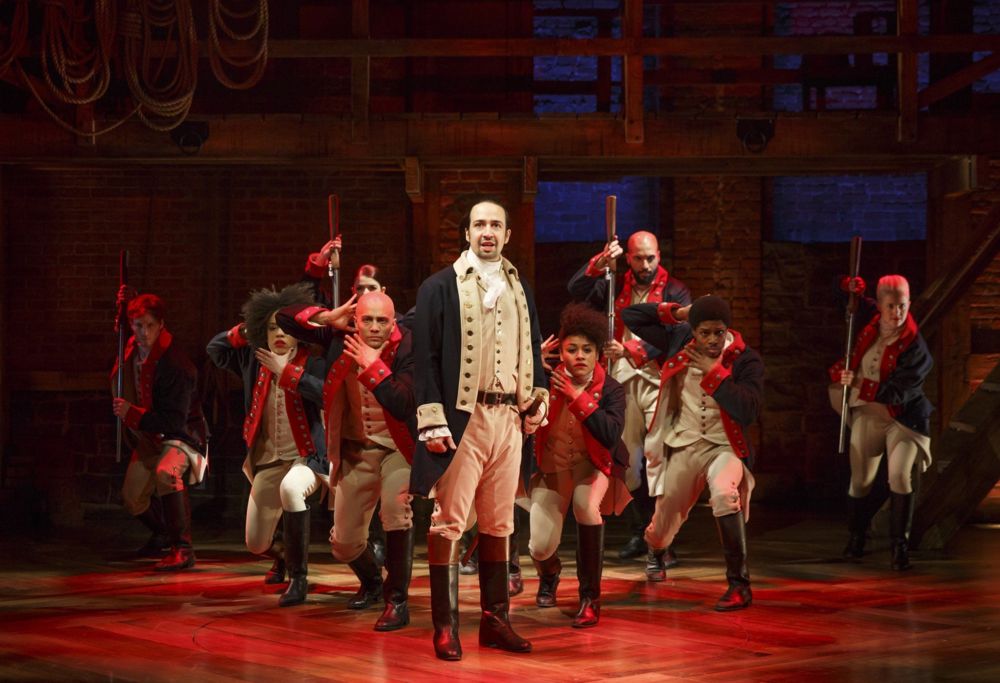
Image result for hamilton battle of yorktown
Our Founding Fathers = Rebels
The rebellion for early Christians was quieter than that of the American Revolution, but it was a rebellion nonetheless.  Threatened by an authority determined to control them, body, mind, and soul, early Christians defiantly gathered together in secret to worship, support each other, and spread their faith.  In the Roman arenas, surrounded by roaring crowds calling for their deaths, they stood by their faith.  They stood by each other.  They wrote to each other in support.  They wrote to each other from exile and from prison.  They continued to spread their message of love and God across the empire despite the risks.  Despite the law.

Because they knew the law was wrong.

They knew there was something beyond it.  Something better.  Something they couldn't fully understand, but were still willing to give their lives to uphold if necessary.  They rebelled, and had they had support from other groups, had greater, easier ways of having their voices heard, they might have rebelled louder.

Early Christians didn't simply decide to rebel because they wanted to, however.  They needed to, and they rebelled by example.  Christianity, at its heart, is a radical religion, because it is based around a radical figure.

Jesus was a rebel.    

I've always found it kind of funny when people justify their mistreatment of others by claiming to be following the teachings of Jesus and Scripture.  They use Jesus' name like a get-out-of-jail-free card for discrimination, bigotry, and hate, disguising their true intentions with the excuse "I'm only trying to save your soul from damnation."  How easily they seem to forget that Jesus dined with outcasts, promised his kingdom to those considered weak, and criticized the wealthy.

Jesus was a radical in his time because he openly defied socially accepted discrimination and oppression.  He pushed back against religious authorities who insisted they alone had the answers to knowing and interacting with God.  He spoke to crowds about radical ideas of what it means to love each other and show each other compassion.  He opened the doors to those previously excluded from salvation.  He knew what he risked in his defiance, in his resistance, but he didn't let that stop him.

Image result for table flip jesusHe taught his followers to turn the other cheek, and also took up a bull whip, flipped tables, and chased the greedy merchants from the temple.  He showed us that resistance is complicated, it's not always neat and tidy, but it's always necessary when those in authority try to decide who is worthy of salvation and who isn't.  When those with power try to keep the downtrodden low so they can maintain their own privilege.  He showed us that to rebel is sometimes necessary to be truly faithful to God.

To be Christian means to be willing to rebel when human dignity is put at risk.  To resist when groups of people are treated as second-class-citizens, whether or not you believe what they believe, or value what they value.  To hold those in power accountable for their actions when they choose money and greed over the good of the people.  To speak out whenever injustice threatens your fellow human.

We rebel, because like the early Christians, like Jesus himself, we have hope in a world better than this one that is worth fighting for.

Just as Christians are called to feed the hungry, give drink to the thirsty, clothe the naked, and welcome the stranger so too are we called to rebel.  Whether against the oppressive actions of a government, or the excluding teachings of a denomination, we resist, we march, we speak out.  And as long as there is suffering in the world, as long as there are people in need, whose voices have been stolen, and whose dignity is threatened, we won't stop.

We will always rebel.

Until next time,
Erin B.