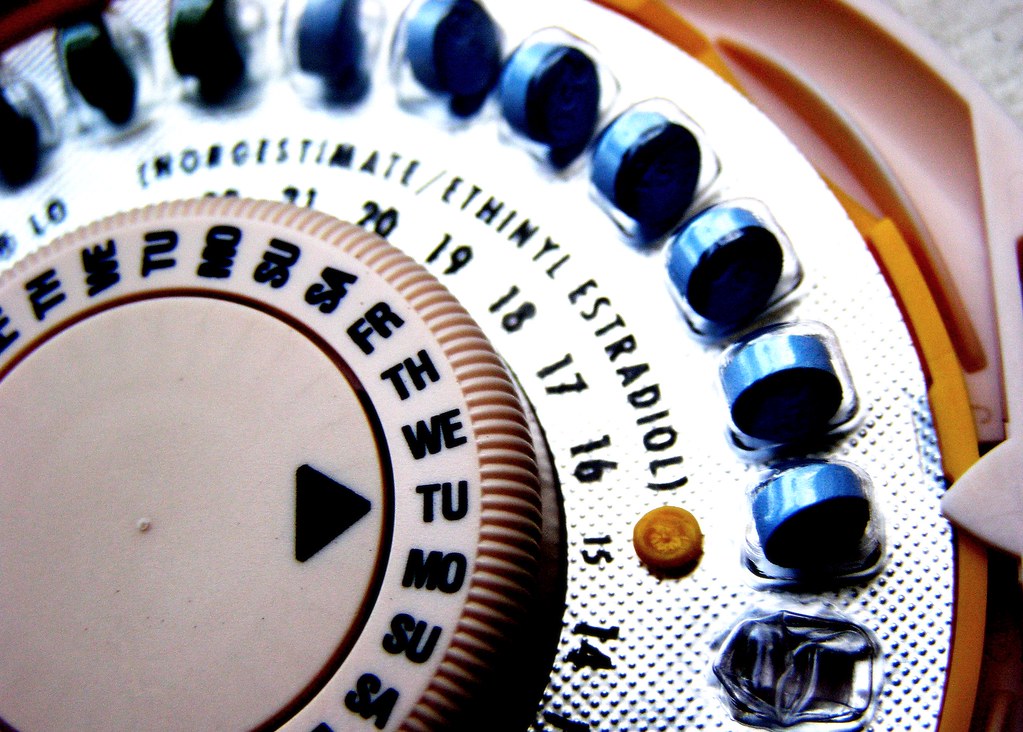
 Never mind that birth control isn't just used to prevent pregnancy, but (among other things) to regulate women's menstrual cycles, help clear up severe acne, ease menstrual migraines, reduce/ease the effects of PMS, PMDD, menorrhagia, dysmenorrhea, polycystic ovarian syndrome, endometriosis, reduce the risk of ovarian cancer and endometrial cancer, and even reduce the risk of breast cancer for women with the BRAC1 and BRAC2 gene mutations.
Never mind that abortion rates drop when women have easy access to affordable birth control and reproductive health care, and teen pregnancy rates drop when they receive comprehensive safe sex education that includes birth control use.
Never mind that birth control restrictions have a greater negative impact on women physically, emotionally, spiritually, and professionally than on men.
Never mind all of that, because we must maintain our religious freedom even if it means denying women the healthcare that they need. Right?
Wrong.
Despite what the religious right and even what such institutions as the Catholic Church would have us believe, the issue of birth control access isn't an issue about religious freedom. It's not an issue about faith at all. It is, and always has been, about control.
It's about controlling women's bodies.
It's about controlling women's sexuality.
Our modern debate over birth control has its foundation in the antiquated belief that female sexuality is something to be feared and contained.
A few clarifying points before I continue: In this discussion, when I use the term "sexuality", I'm not using it to refer to an individual's sexual orientation. I use it to refer to the innate sexual nature that most (not all!) people possess. I'm focusing in on faith perspectives, broadly Christian and at times specifically Catholic, because it is on these beliefs and perspectives that our current views on sexuality are founded. Finally, I'll be talking specifically about the way women within the Christian faith are told to act and be in terms of sexuality. When I use the phrase "women of faith" I am referring to the Christian faith broadly. While much of what I will talk about crosses over and effects women outside of the Christian faith, they are the ones primarily impacted by the beliefs I will expound on.
All right, so let's begin with a simple question.
Can women of faith also be sexual?
Were you to ask most people of faith if they believed a woman's sexuality was an inherently bad or evil aspect of the individual, they would probably say no. Ordained, lay, somewhere in between, whatever...ideally, most people of faith would not believe a woman's sexuality is a bad thing. But as an organization...as a system of belief...that's another story.
It's not just that we're told not to have sex outside of marriage. Sexuality isn't always about sexual acts. It's about how we present ourselves...how we embrace and accept ourselves. Yet piety and sexuality don't seem able to go hand-in-hand in the Christian faith. We regulate sexuality, confining it to the bonds of marriage, and shaming those who step outside of those bonds. The notion of sexual inequality between men and women is nothing new, but it's made starker in the Christian faith where the male form remains firmly the ideal and the female form somehow lesser. Women are told to act a certain way so as not to cause temptation. To dress a certain way so as not to draw attention. To have certain expectations of ourselves and our "purity". To be humble, and gentle, and loving, and submissive because that is simply our feminine "nature", whereas men are aggressive, and outspoken, and dominant.
The Christian Church is built on the foundation that sex is wrong, and female sexuality is particularly dangerous. Though our modern ideals would shirk from these notions, we still maintain antiquated beliefs in what is good and bad about the human body based on the works of men that lived hundreds and hundreds of years ago when women were no better than property and God was firmly male. St. Paul, Augustine, Aquinas...the patriarchs of our faith all held the view that there was something inherently sinful about sex, and that it needed to be contained. St. Paul wrote that it was better not to marry, but if you couldn't control your sexual desires, better to be married than to burn. Augustine believed that original sin was passed from generation to generation through the act of sexual intercourse. Aquinas wrote that, according to natural law, sex must be used for the act of procreation, and anything outside of that intent is sinful.
Still, even sex within the bonds of marriage is not the ideal for some. In the Catholic Church, celibacy is a mark of leadership. Virginity is a mark of sainthood (though how often to we elevate a man to sainthood because of his virginity?). Women religious were once cloistered away behind high convent walls and body-masking habits to preserve their purity and hide them away from prying eyes. The Song of Songs is held up as some kind of love letter between God and the Church, or God and humanity, instead of the erotic poetry between a woman and her lover (doesn't ever say they're married) that it is. We even stripped Mary of her sexuality, perpetuating her virginity though she was married, because sex was too great of a distraction from her work as Christ's mother, and too dirtied with sin for her to partake in it and still remain the pure image of femininity the Church wanted her to be. And so, the feminine ideal we are presented in the Catholic faith is that of the humble, quiet, pious, virgin mother who was so free of sin that even sexual desire didn't darken her immortal soul.
Where does such negativity come from? Why does sex so often seem the root of all that is evil? God made us sexual beings. It's a basic part of our human existence. Today, you can often hear people say that sexuality is as much a spiritual experience as a physical one. That it's a gift from God to be cherished.
So why do we continue to fear it?
Could it be because we can't always control what triggers our sexual desires? Is it because our sexuality is such a primal, natural part of our beings that it makes us more animal than human when we acknowledge it? Is it because it steals us of our reason and distracts us from God's will?
And why women? Why are women of faith put under so much more pressure than men to rein in their sexuality?
Eve was the one that tempted Adam into sin. Women are weaker and so more susceptible to falling to the sins of the flesh. They will drag men down with them. They must be controlled. We must protect ourselves from them, etc. etc.
You might think that these ideas and beliefs are crazy, but they remain foundational to us to this very day even if we don't recognize them. They are reflected in what we are told is right and reverent, and what is inappropriate and disrespectful to God.
One glaring example of this is how women of faith are told to dress. The way we dress is dictated in such a way as to hide our sexuality from the world. We're told to cover ourselves, to dress a certain way to maintain an appropriate "modesty" in order to really respect ourselves. In schools, especially religious schools, girls are put under more pressure by dress codes dictating what is "appropriate" for them to wear than boys are. Buy why is that? Why is the girl in a long skirt and baggy blouse somehow more pious than the girl in short-shorts and a low V-neck shirt? Why does the amount of skin we show demonstrate our commitment to our faith? Why is covering ourselves up and hiding our bodies away somehow a sign of our self-respect, and not our shame? One of the first signs indicating that Adam and Eve had fallen from grace was their embarrassment over their own nakedness. They covered themselves to hide their bodies because they were ashamed. So why, instead of allowing women to embrace their bodies, do we associate the display of naked flesh with sin?
I work out. I have nice legs. If I want to wear a shorter skirt to show off my legs because I'm proud of them, is that really so wrong?
Does God really care?
"But Erin, we can't have women going around half-naked! That's just not right!"
What about the female body is so wrong? What about female sexuality is so wrong?
We don't tell women to cover themselves and downplay their sexuality because we think that's really what is best for them. We do it because we don't want them to be a "temptation" for men. How many times has a girl been sent home from school because her clothing was deemed "inappropriate", and the reason given for disciplining her was that she was a distraction to her male counterparts? How many times have we explained away a rape or sexual assault by pointing to what the victim was wearing and saying she was asking for it? How many times has a women been judged and called a slut simply because of her outfit?
But it's not just our clothes. It's not just how we present ourselves. It's not just how we talk about sex. It's how our bodies are policed. How control over our own bodies is taken from us. In the Catholic Church, for instance, we're told that birth control is wrong because it blocks the possibility of procreation, but these decisions are being made by an institution where women have little to no say in regards to the laws and doctrines of their own faith. These declarations are being passed down the ladder by the celibate men in charge who've never had to worry about irregular periods, or whether or not getting pregnant would have an effect on their job or possibly pose a risk to their health. They don't know the physical strain a woman's reproduction cycle causes, and how much emotional and mental stress trying to keep track of everything can cause.
They don't see that. The system that has built up around them, one which fears female sexuality and bodily freedom, won't allow them to see that. Won't allow them to trust a woman with herself. History has shown us that the dominant don't like to give up control and power...they fear what will happen if the dominated are empowered.
What's more terrifying to a patriarchal establishment than a woman in full command of her body and sexuality?
So, I don't celebrate the mandate rollback as a victory for religious freedom. I see it as yet another form of oppression. Another way to stifle female sexuality and belittle a beautiful gift from God. Another demonstration of the power of those who are dominant in our Church and society, and what lengths they will go to to keep it.
But at the end of the day, aren't those the people who Jesus spoke out against the most?
Until next time,
Erin B.

